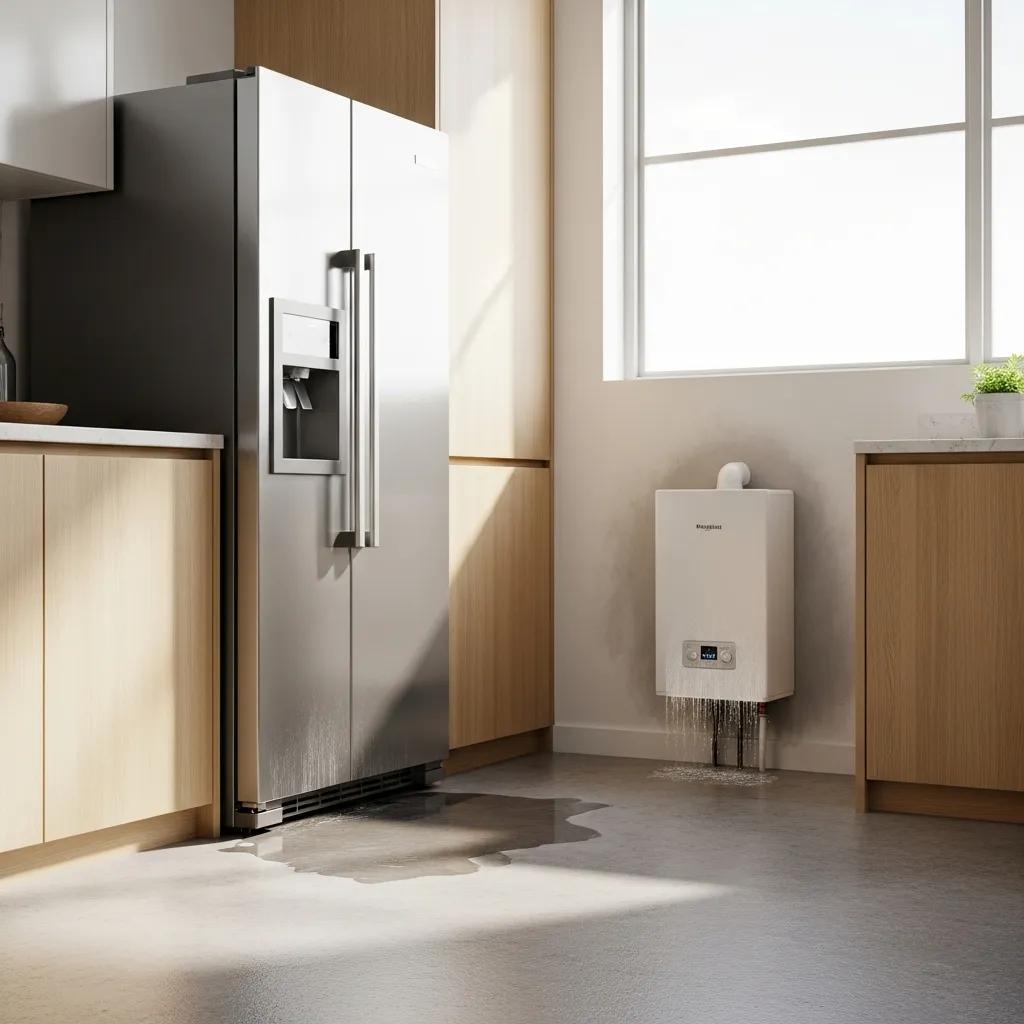
Refrigerator Leaks , Water heater leaks (Appliance Leaks)– Causes, Damage, and Insurance Coverage in PA and beyond
Appliance Leaks: What Causes Refrigerator and Water Heater Damage — Coverage & Claims in PA and NJ

Leaks from refrigerators and water heaters are some of the most common sources of indoor water damage. They need quick attention to limit structural loss and stop mold from taking hold. This guide walks homeowners through why these leaks happen, the kinds of damage they cause, and what people in Pennsylvania and New Jersey should know about insurance coverage and claims. You’ll learn to spot common causes — clogged defrost drains, failed inlet valves, corroded tanks, and malfunctioning T&P valves — and get practical steps for documenting damage and responding in an emergency so evidence is preserved for a claim. The article also explains how homeowners can work with public adjusters and vetted restoration contractors to protect recoveries and restore property quickly. Sections cover causes (with a quick cause→evidence table), insurance scenarios (sudden vs. gradual damage), the public adjuster’s role, immediate mitigation steps, Adjustering’s coordination process for claims and repairs, and prevention tips for refrigerators and water heaters. Throughout, guidance references public adjuster insurance claims, refrigerator leak insurance, water heater leak insurance, mold from appliance leak, and water damage restoration.
What commonly causes refrigerator and water heater leaks?
An appliance leak happens when a component fails or a drainage path is blocked, letting water escape and contact building materials. The failure modes differ by appliance, but both create similar risks — wood rot, warped flooring, and mold. Refrigerator leaks usually trace back to clogged defrost drains, failed inlet valves, pinched ice-maker lines, or cracked drain pans. Water heater leaks most often come from tank corrosion, pressure-related failures, loose fittings, or seam ruptures in older tanks. Identifying the root cause quickly matters because insurance outcomes often hinge on whether the loss was sudden and accidental or the result of gradual wear and tear. The sections below separate refrigerator and water heater specifics and offer simple diagnostics homeowners can use to document visible evidence. Matching observable signs to likely causes helps prepare a stronger appliance-leak insurance claim and guides immediate mitigation.
The table and lists that follow summarize common causes, typical signs, and short diagnostics so homeowners can match symptoms to likely roots and gather meaningful documentation for a claim.
| Appliance Component | Likely Cause | Typical Evidence / Signs |
|---|---|---|
| Defrost drain / drain pan | Clog or freeze | Pooled water at base of fridge, slow drainage, ice buildup in freezer compartment |
| Water inlet valve / ice maker line | Valve failure or loose connection | Continuous drip from dispenser, wet cabinet, wet flooring near fridge, water supply valve wet to touch |
| Tank lining / corrosion | Corrosion or tank rupture | Rust stains, continuous seepage from tank base, sudden large volume leak, metallic sediment in water |
| Temperature & Pressure (T&P) valve | Overpressure or valve failure | Discharge tube wet or active drain flow, hissing sound, intermittent spurted leaks |
| Fittings and flexible hoses | Loose or cracked fittings | Localized wet spots, soaked insulation on pipes, visible cracks in supply lines |
How refrigerator leaks start — and what they do to your home

Most refrigerator leaks come from a limited set of mechanical or drainage failures that let water escape and contact nearby materials, creating rot and mold if left unchecked. Typical causes are a clogged defrost drain that reroutes meltwater past the drip pan, a failed inlet valve feeding the ice maker or dispenser, cracked supply hoses, and damaged or misaligned drain pans. In Pennsylvania homes with hardwood or laminate floors, even a small persistent leak can cause cupping, delamination, and hidden subfloor damage; tile or vinyl can hide moisture beneath cabinets and thresholds where mold can develop unseen. Homeowners should photograph wet spots, capture appliance model and serial numbers, and note times to build a clear record for an insurance claim. Early documentation and mitigation reduce restoration scope and help establish whether the loss was sudden and accidental or due to long-term neglect.
Signs of refrigerator leaks often overlap with water heater problems, since both can create hidden moisture paths and mold risks that need prompt containment and documentation.
- Typical refrigerator leak causes: clogged defrost drains, inlet valve failures, and cracked supply hoses.
- Persistent moisture under cabinets raises the risk of mold and structural damage.
- Document serial numbers, timestamps, and affected materials to strengthen any insurance claim.
Typical water heater leak causes and their effects

Water heater leaks most often stem from internal tank corrosion, failed temperature-and-pressure (T&P) relief valves, loose fittings, or age-related seam failures that can lead to sudden ruptures. Corrosion accelerates when the anode rod fails or water chemistry is aggressive; sediment buildup and thermal stress increase pressure on fittings. Climate factors such as basement freeze-thaw cycles can also strain external connections. Consequences include basement flooding, soaked subfloors, damaged insulation, electrical hazards near panels or outlets, and mold growth that can begin within days. If you suspect a leak, shut off the heater’s power and water supply immediately, photograph the tank and affected areas, and record meter readings or timestamps to document onset and scale for an insurance claim.
Addressing water heater leaks quickly lowers the chance of progressive damage and helps determine whether the loss is covered as sudden and accidental or is a gradual, excluded failure under a typical homeowners policy.
How do homeowners policies cover water damage from appliance leaks in PA and NJ?
Coverage for appliance leaks usually depends on whether the loss is “sudden and accidental” or the result of gradual wear and tear. Many policies will cover resulting property damage from an unexpected failure but exclude repair or replacement of the appliance itself. Sudden events — a tank rupture or a burst supply line — commonly trigger coverage for building repairs, water extraction, and mold remediation up to policy limits after the deductible. Slow, long-term leaks caused by lack of maintenance are often excluded. Deductibles, mold limits, and code-upgrade requirements can significantly affect settlement amounts, so careful documentation and prompt reporting are essential. Note that flood and groundwater intrusion are separate perils generally excluded from standard homeowners policies in both Pennsylvania and New Jersey; distinguishing flood from plumbing or appliance water is important when setting expectations for coverage.
The table below compares common claim scenarios and likely coverage outcomes to help homeowners and adjusters quickly categorize an event and decide next steps for mitigation and documentation.
| Loss Scenario | Insurance Scenario | Likely Coverage Outcome |
|---|---|---|
| Catastrophic tank rupture | Sudden and accidental water damage | Building repairs and contents coverage after deductible; appliance replacement may be excluded |
| Slow drip from corroded fitting | Gradual wear and tear | Likely excluded for appliance repair; resulting long-term damage often denied |
| Ice maker hose burst causing floor damage | Sudden accidental event | Property damage typically covered; prompt mitigation required |
| Basement flooding from heavy rain | Flood event | Generally excluded from standard homeowners policy; requires separate flood insurance |
This comparison sets realistic expectations for claim outcomes and underscores the value of early documentation, mitigation, and, when appropriate, public adjuster involvement to interpret policy language.
If you’re unsure how your policy language applies, Adjustering connects homeowners with licensed public adjusters who represent the insured and help interpret policy terms during a claim. Adjustering’s free referral service can link you to public adjuster insurance claims expertise and vetted restoration partners across Philadelphia, Bucks, Montgomery, Chester, and Delaware counties, plus South and Central Jersey — improving the chances that sudden, accidental losses are properly classified and valued.
Why hire a public adjuster for appliance water damage claims?
A public adjuster represents you — the policyholder — throughout the claims process. They provide independent forensics, document the full scope of damage, and negotiate settlements that often exceed the insurer’s first offer. Unlike company adjusters, who represent the insurer, public adjusters focus on uncovering hidden damage (wet insulation, compromised subflooring, secondary mold), preparing a rebuild-based scope, and including code upgrades and proper remediation sequencing in estimates. A public adjuster is especially useful when visible damage is limited but hidden loss is likely, when the insurer’s offer seems low, or when policy interpretation (sudden vs. gradual) is disputed. They also manage insurer communications, inspection timelines, and appeals so homeowners can focus on immediate mitigation and restoration.
Adjustering helps homeowners access licensed public adjusters through a free referral model and coordinates introductions to vetted restoration contractors; homeowners can contact Adjustering by phone or email to connect with local experts who specialize in appliance-leak claims. This support reduces confusion about claim steps, ensures professional documentation, and streamlines access to water damage restoration and mold remediation services throughout the service area.
How a public adjuster maximizes your refrigerator leak claim
A public adjuster maximizes a refrigerator leak claim by performing a detailed forensic inspection, identifying both visible and hidden damage, and preparing a scope that reflects full replacement and repair — not just surface fixes. They document soaked cabinet framing, compromised subflooring under vinyl or hardwood, and microbial growth, then quantify restoration needs: removal, drying, structural repair, and mold remediation. Public adjusters compare contractor estimates, negotiate depreciation and recoverable costs, and make sure deductibles and limits are applied correctly. By presenting thorough photo documentation, time-stamped evidence, and aligned contractor scopes, a public adjuster raises the chance of recovering the full cost to return the property to pre-loss condition.
Clearly differentiating appliance repair from property restoration is central to these negotiations and helps determine when to engage a public adjuster.
When and how to engage a public adjuster for water heater leaks
Contact a public adjuster when damage is extensive, the insurer’s response seems inadequate, or you suspect hidden loss such as wet insulation or structural compromise — early engagement improves outcomes. Best practice: stabilize the scene immediately (shut off water, limit spread), then contact a public adjuster before accepting a final settlement so the adjuster can attend inspections, document evidence, and preserve appeal rights. Working with Adjustering, homeowners get referrals to licensed public adjusters and vetted contractors in their county for a coordinated response. Expect an initial consultation, an on-site inspection with detailed documentation, a prepared estimate for full repair, and negotiation on the claim — steps that typically accelerate recovery and improve settlement accuracy.
Knowing what to do right after discovering a leak makes the adjuster’s work more efficient and preserves the strongest evidence for your claim.
Immediate steps homeowners should take after discovering an appliance leak
After you find a refrigerator or water heater leak, prioritize safety and evidence preservation: shut off the appliance’s water supply, cut power if there’s an electrical risk, contain the spread with towels or temporary barriers, and document the condition with time-stamped photos and video. Once safe, start a documentation routine: photograph appliance model and serial numbers, take wide and close-up shots of affected materials, and record dates, times, and any meter or appliance readouts. Report the claim to your insurer promptly and note the claim number, but avoid making permanent repairs until the scope is documented unless immediate mitigation is necessary to prevent more damage. If you suspect hidden damage or the insurer’s adjuster misses potential loss areas, consider a public adjuster for advocacy and a fuller assessment.
- Shut off the water supply to the appliance and isolate electricity if water is near electrical components.
- Contain the leak with towels, buckets, or temporary barriers to limit spread to adjacent rooms.
- Photograph and video the scene with timestamps, showing appliance model numbers and affected materials.
- Notify your insurer to open a claim and record claim reference numbers for future correspondence.
- Contact a public adjuster or restoration contractor if visible or suspected hidden damage exceeds minor cleanup.
How to safely document and report refrigerator leak damage
Safe documentation starts with stabilizing the area — avoid energized circuits near wet spots — then capturing clear, chronological visual evidence that shows onset and scope. Take wide-angle photos for context and close-ups of wet cabinet bottoms, swollen flooring, and appliance serial numbers; include a timestamp or a dated object to establish chronology. Record short videos showing active leaks, the model and serial number, and the visible extent of moisture penetration. Keep copies in multiple locations and send a dated copy to your insurer when filing the claim. Well-labeled photo and video evidence strengthens a refrigerator leak insurance claim by tying observed damage to a clear time and failure mode.
Best practices for handling water heater leak emergencies
In a water heater emergency, priorities are: shut off the water at the isolation valve, cut electrical power at the breaker for electric units or turn off the gas for gas units, and make the area safe from electrical contact. Contain flowing water with buckets, towels, or temporary pumps, and move valuables and sensitive items out of the affected area. Photograph all actions and conditions with dated photos and video. Call an emergency restoration contractor for extraction and drying when significant volumes are involved, and consider a public adjuster to attend initial inspections if structural or mold risks are likely. Safety note: don’t operate electrical devices in standing water and avoid attempting tight plumbing repairs without proper tools and training.
After safe shutdown and containment, coordinate documentation and professional response to preserve claim validity and limit secondary damage.
How Adjustering coordinates the claim and restoration process for appliance leaks
Adjustering coordinates claims and restoration by matching homeowners with licensed public adjusters and vetted restoration, roofing, and siding contractors so inspections, documentation, and repairs are synchronized and nothing is missed during settlement and rebuilding. The workflow focuses on fast local matching to experts who understand regional conditions in Philadelphia, Bucks, Montgomery, Chester, and Delaware counties and in South and Central Jersey, so an on-site adjuster and contractor can assess structural, mechanical, and microbial risks together. Adjustering’s free referral model creates a single coordinated intake to avoid delays and duplicate inspections; the approach emphasizes maximizing insurance recoveries by identifying hidden damage and aligning contractor scopes with the public adjuster’s estimate. Clear communication between parties reduces uncertainty, speeds restoration, and helps ensure insurance settlements cover necessary repairs.
| Entity | Role | What They Deliver |
|---|---|---|
| Public Adjuster | Claim advocacy | Full forensic inspection, documented scope, negotiation with insurer |
| Restoration Contractor | Mitigation & repair | Water extraction, drying, mold remediation, structural repair scopes |
| Homeowner | Decision-maker | Authorization for repairs, documentation, and claims decisions |
| Insurer | Payer & assessor | Policy interpretation, payment of covered costs, insurer adjuster inspections |
How public adjusters and restoration contractors collaborate for a seamless recovery
Public adjusters and restoration contractors work together by sharing inspection findings, aligning scope items, and sequencing mitigation so drying and repairs don’t conflict with claim settlement timelines. A public adjuster documents the full loss and pinpoints hidden damage that contractors may need to expose or remediate; contractors then submit detailed estimates that match that scope so insurers can authorize necessary work. Coordinated scheduling ensures emergency mitigation happens immediately while reconstruction tasks are authorized and funded, minimizing occupant displacement and lowering the risk of secondary damage. Ongoing communication and shared documentation also prevent disputes over responsibility and keep the claim and rebuild process transparent.
Homeowners benefit from a single point of coordination that reduces stress and clarifies timelines — the model Adjustering provides with its matching and referral services.
What peace of mind does Adjustering provide during water damage restoration?
Adjustering offers homeowners peace of mind by connecting them to licensed public adjusters and vetted contractors, reducing the complexity of managing multiple vendors during a stressful water-damage event. The service shortens the time homeowners spend scheduling inspections and comparing estimates, and the free-referral approach ensures access to local experts who know regional building practices and insurance norms. Clear timelines, centralized documentation, and aligned scopes lead to more consistent communication and fewer surprises during settlement and repair. Knowing a public adjuster is advocating for full recovery while restoration pros complete approved work lowers homeowner anxiety and speeds restoration.
Those benefits make it easier for homeowners to focus on recovery while professionals handle technical claim negotiations and repairs.
How homeowners can prevent future refrigerator and water heater leaks
Preventing future appliance leaks depends on routine maintenance, periodic inspections, and replacing parts before they fail. Early action reduces the chance of sudden catastrophic loss and long-term degradation that insurers may exclude. For refrigerators: keep defrost drains clear, replace flexible water lines every 5–7 years or at first sign of cracking, and check drip pans and inlet valves for corrosion or wear. For water heaters: flush the tank annually to remove sediment, test the T&P valve, inspect the anode rod and fittings for corrosion, and monitor pressure with a gauge to detect abnormal increases. Maintain a service schedule and keep receipts and records — proof of regular care supports the argument that a loss was sudden rather than neglected when filing a claim.
The maintenance checklists below offer practical intervals and checks homeowners can use to reduce risk and strengthen potential insurance coverage for sudden failures.
- Refrigerator maintenance checklist: Clear the defrost drain monthly to prevent clogs and overflows. Inspect water supply hoses and inlet valves every six months for wear. Clean and level the drip pan annually and record the appliance model and serial number.
- Water heater maintenance checklist: Flush the tank annually to remove sediment and extend service life. Test the temperature-and-pressure relief valve yearly and replace if it leaks. Check the anode rod and fittings annually and document maintenance actions.
Maintenance tips to reduce refrigerator leak risk
Cut refrigerator leak risk by keeping seals and drains clean and replacing flexible supply lines proactively. Monthly defrost-drain and drip-pan checks prevent clogs and overflow; semiannual inspections of water lines and inlet valves catch cracks or loose fittings early. Clean condenser coils and keep the fridge level to reduce stress that can cause poor drainage, and log maintenance dates to support any later claim for sudden damage. If a leak’s source is unclear or components are hard to access, hire a qualified technician — it protects warranties and provides professional documentation for insurance.
These refrigerator practices pair with broader water heater maintenance actions that address pressure and corrosion risks.
How to maintain your water heater to avoid leaks and damage
Maintain your water heater by flushing the tank yearly to remove sediment, testing the T&P valve regularly, and inspecting the anode rod to slow internal corrosion that leads to tank failure. Monitor household water pressure and install a pressure-reducing valve if readings are consistently high to reduce stress on fittings. Replace the anode rod when it’s depleted to prolong tank life. Keep a maintenance log with dates, actions taken, and service receipts — that record demonstrates active care and helps distinguish sudden failures from neglect in a claim. If the heater is more than a decade old or shows rust, plan for replacement rather than risk an unexpected rupture that can cause extensive damage.
Consistent, documented maintenance both extends appliance life and supports homeowners in achieving better insurance outcomes if sudden failures occur.
Frequently Asked Questions
What are the signs that my refrigerator or water heater may be leaking?
Look for visible pooling around the appliance, damp spots on floors or walls, and unusual noises like hissing or dripping. For refrigerators: check for ice buildup in the freezer or a clogged defrost drain. For water heaters: watch for rust stains or continuous seepage at the tank base. Early detection is key to preventing extensive damage, so inspect appliances regularly for these signs.
How can I document damage for my insurance claim effectively?
To document damage: take clear, time-stamped photos and videos of affected areas, include close-ups of visible damage and appliance model and serial numbers, and record the date and time of the incident. Note any mitigation actions you take and keep a detailed log of communications with your insurer. A clear timeline and thorough evidence strengthen your claim.
What should I do if my insurance claim for an appliance leak is denied?
If a claim is denied, review the denial letter to understand the reason — common denials cite gradual wear and tear. You can appeal by providing additional documentation that supports your position. Engaging a public adjuster can also help: they can reframe the loss, supply forensic evidence, and negotiate with the insurer on your behalf.
Are there specific maintenance tasks I should prioritize for my appliances?
Prioritize clearing the refrigerator defrost drain, inspecting water supply hoses, and flushing the water heater annually to remove sediment. Also test the T&P valve yearly and monitor water pressure to prevent excess stress on fittings. Keep a maintenance schedule and document tasks to help prevent leaks and support claims if problems arise.
What are the potential health risks associated with mold from appliance leaks?
Mold from appliance leaks can affect respiratory health, especially for people with allergies, asthma, or weakened immune systems. Exposure can cause respiratory irritation, allergic reactions, and other symptoms. Address leaks promptly and remediate any mold growth; for significant or suspected contamination, hire a professional for safe removal.
How can I choose the right public adjuster for my claim?
Choose a public adjuster by checking credentials, licensing, and experience with appliance-leak claims. Read reviews, ask for referrals, and confirm they understand your policy and local regulations. A good public adjuster will advocate for your interests and work to maximize your settlement.
Conclusion
Knowing the common causes and impacts of appliance leaks helps homeowners protect their property and navigate insurance claims with confidence. Timely documentation, prompt mitigation, and working with a public adjuster when appropriate improve claim outcomes and speed restoration. Regular maintenance and quick action greatly reduce the risk of severe damage and costly repairs. To take the next step, explore our resources on appliance leak prevention and insurance claims — and contact Adjustering if you need a referral to a public adjuster or restoration partner.
