
Maximize Your Payout: Insurance Claim Help in Philadelphia
Get the Full Insurance Payout Your Property Deserves

When property damage happens, the choice between following your insurer’s standard claims process and hiring a public adjuster often determines how much you recover and how quickly repairs start. This guide lays out the practical difference between a public adjuster and an insurance company adjuster, walks through common steps and pitfalls in a traditional claim, and shows when a public adjuster can raise your settlement while cutting stress. You’ll get clear tactics for documenting damage, negotiating supplements, and deciding whether to bring in outside advocacy. We also cover coordinated restore-and-claim workflows that pair adjusters with vetted contractors so no damage is missed and repairs match the negotiated scope. Along the way we add local, actionable context for homeowners and businesses in Philadelphia, storm-damage assistance, and straightforward guidance on public adjuster fees. Begin by learning the incentives and typical behaviors of each adjuster type—this foundation leads directly to strategies that maximize settlements and deliver full property restoration.
What Are the Key Differences Between Public Adjusters and Insurance Company Adjusters?
Public adjusters work for you—the policyholder—documenting damage, building value, and negotiating to recover the full cost of repairs. Insurance company adjusters work for the carrier to verify loss and protect the insurer’s financial position. That difference in allegiance shapes inspection depth, scope development, and negotiation priorities, and it directly affects settlement size and what gets repaired. Public adjusters tend to produce more exhaustive documentation, rely on contractor estimates or Xactimate-style line items, and pursue supplements when concealed damage is found. Insurer adjusters typically use company-approved estimating systems, may apply depreciation, and sometimes favor faster case closure over exhaustive scope capture.
Because public adjusters pursue broader scopes and supplements, they often recover overlooked line items that an insurer’s initial estimate can miss or underreport.
Knowing these incentives helps homeowners spot underpaid claims and decide when advocacy is likely to increase recovery. The section that follows explains who public adjusters represent and what they do during a claim.
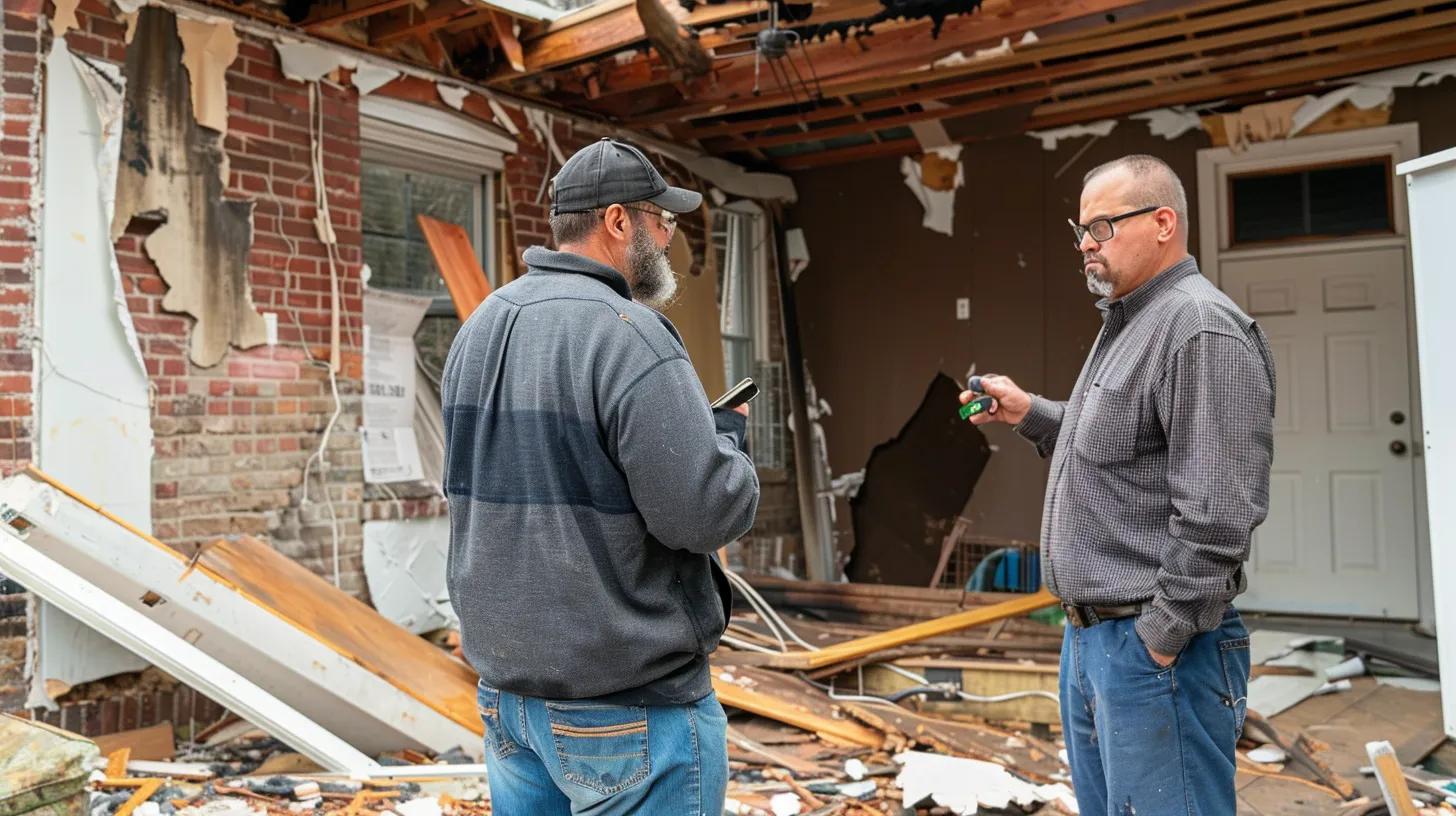
To learn more about our mission and the team focused on maximizing property-damage recoveries, see Adjustering's approach and values.
Who Does a Public Adjuster Represent and What Is Their Role?
A public adjuster is a licensed advocate hired to protect the policyholder’s interests: they evaluate damage, create a full scope of loss, and negotiate for fair settlement value. They inspect visible and hidden damage, document conditions with photos and reports, prepare itemized estimates, and handle insurer communications on your behalf. Because most public adjusters work on contingency, their incentive is aligned with maximizing your recovery rather than minimizing payouts—this alignment usually produces more thorough discovery and supplements for concealed issues.
Public adjusters are especially valuable on complex, multi-peril claims—storm damage, roof loss, extensive water and mold issues—where missed items can materially change settlement outcomes.
Next we contrast that role with how insurer-side adjusters typically approach claims.
How Do Insurance Company Adjusters Handle Claims Differently?
Insurance company adjusters are appointed by the carrier to confirm loss and determine the insurer’s liability under the policy. Their workflow emphasizes documentation that supports the carrier’s position and follows company estimating and payment procedures. Insurer adjusters often produce an initial estimate from a focused inspection, apply depreciation or policy-specific endorsements, and may not include hidden or secondary damage unless supplements are requested. Caseload pressure and internal targets can narrow scopes and produce initial offers that leave room for negotiation. Policyholders who accept early, unchallenged estimates risk underpayment for items like attic water migration, roof decking replacement, or secondary mold remediation.
Recognizing these common practices helps you decide when to expand documentation, submit supplements, or hire a public adjuster to challenge omissions and widen the scope.
What Are the Benefits of Hiring a Public Adjuster for Your Property Damage Claim?
Bringing in a public adjuster delivers measurable benefits: higher average settlements, time savings, and more complete damage discovery that prevents missed repairs. A public adjuster applies policy interpretation, line-item estimating, and negotiation experience to increase payouts so settlements align with actual repair costs. For homeowners and business owners handling storm claims, roof damage, or losses across multiple systems, that expertise often yields substantial net gains even after contingency fees. Beyond dollars, adjusters simplify communication, manage supplements, and relieve you of paperwork and scheduling during an already stressful recovery.
Below are concrete benefits and how they translate into outcomes for policyholders.
- Higher settlements through detailed scope expansion and negotiation.
- Significant time savings by handling insurer communications and paperwork.
- Thorough damage discovery, including concealed issues insurers sometimes miss.
- Coordinated supplemental claims and appeals when initial offers fall short.
Those benefits usually produce a clearer restoration plan and fewer out-of-pocket surprises when repairs begin. The comparison table below maps each benefit to how it works and the typical result.
| Benefit | Mechanism | Typical Outcome |
|---|---|---|
| Higher Settlement | Itemized estimates and supplemental claims | Increased payout that covers additional repairs |
| Time Savings | Single point of contact for insurer interactions | Faster resolution and reduced homeowner workload |
| Thorough Discovery | Joint inspections with contractors and detailed reporting | Hidden damage (mold, structural) identified and included |
| Negotiation Expertise | Appeals and evidence-backed valuation | Better replacement-cost recovery versus initial offers |
The table shows how targeted adjuster actions translate into quantifiable improvements—higher payouts and less homeowner effort. Next, we outline the specific tactics public adjusters use to maximize settlements.

How Do Public Adjusters Maximize Your Insurance Settlement?
Public adjusters combine policy analysis, thorough documentation, and contractor-backed estimates to expand claim scope and justify higher line-item values. They parse policy language to find coverage opportunities, gather photographic and measurement-based evidence, and present Xactimate-style line items or contractor scopes reflecting true replacement costs. During negotiations they press for supplements when concealed damage appears in mitigation or repairs and escalate disputed items through formal appeals when needed.
These tactics frequently convert low initial offers into materially larger settlements—especially for roof damage claims, water intrusion with secondary mold, and multi-system storm losses.
The next section explains how adjusters remove operational burden and reduce stress.
In What Ways Do Public Adjusters Reduce Stress and Simplify the Claims Process?
Public adjusters take over administrative tasks: filing required documents, scheduling inspections, coordinating temporary repairs, and tracking supplement requests through payment. That operational support turns a fragmented process into a managed timeline with a single point of contact for updates and questions. Clients report fewer missed deadlines, faster approvals for emergency mitigation, and clearer expectations around repair timing when an adjuster manages the claim. By aligning contractor scopes with insurer valuation and handling the back-and-forth, adjusters also shorten delays that stall repairs.
With those burdens lifted, property owners can focus on recovery and repair decisions instead of claim administration. This sets up a practical checklist for handling an insurer-driven claim.
How Does the Traditional Insurance Claims Process Work and What Are Common Challenges?
The insurer-driven claim workflow typically follows a predictable sequence: immediate mitigation and evidence gathering, filing a notice of loss, an insurer inspection, an initial estimate, payment or reservation of rights, and then repairs or supplements. Each step contains pitfalls that can reduce settlement value—insufficient evidence collection, rushed inspections, narrow initial scopes, and missed supplement opportunities when concealed damage appears. Understanding this sequence helps you preserve options: take photos, perform temporary mitigation with receipts, and document any later-discovered damage for supplements.
Spotting these common failure points makes it easier to know when to accept an offer and when to escalate.
What Are the Typical Steps in Filing a Property Damage Insurance Claim?
After damage, follow a clear sequence to protect coverage and preserve evidence: prioritize safety and temporary mitigation, photograph and document all damage, keep receipts for emergency repairs, notify your insurer promptly, and schedule the insurer inspection while preparing an independent scope if needed. Early documentation establishes the pre-mitigation condition and supports later supplements; mitigation receipts justify necessary emergency work. Prompt notice and transparent records reduce the risk of denials for late reporting and strengthen the basis for supplemental claims if hidden damage surfaces during repairs.
These steps explain why initial offers are often lower than full repair-cost estimates, which we cover next.
Why Do Policyholders Often Receive Underpaid Settlements?
Underpayment usually stems from initial inspections that miss concealed damage, estimators applying depreciation or conservative assumptions, or insurers using cost-control procedures that favor lower line items. Common causes include scope omissions (for example, failing to account for water migration), conservative replacement-cost assumptions, or misread policy provisions. Remedies include documenting evidence for supplements, getting independent contractor estimates, and hiring a public adjuster when the initial settlement won’t cover necessary repairs.
Understanding these systemic causes makes it clear when advocacy can produce measurable recovery increases and supports coordinated claims-and-restoration models.
How Does Adjustering’s Coordinated Approach Improve the Claims and Restoration Experience?
Adjustering pairs claim advocacy with a vetted contractor network to streamline documentation, negotiation, and restoration so property owners recover fully and repairs match negotiated scopes. Based in Huntingdon Valley, PA, Adjustering supports homeowners and business owners across Philadelphia, Bucks, Montgomery, Chester, Delaware counties, South Jersey, and Central Jersey. We act as an end-to-end support system that connects clients with licensed public adjusters and vetted roofing, siding, and restoration contractors. Our value: we remove confusion from the insurance process, provide fast access to local experts, make sure no damage is missed during inspections, and coordinate adjuster-contractor workflows so compensation funds complete restoration. Our referral service is free for clients; public adjusters typically bill a percentage of the insurance settlement only after payout.
This integrated workflow reduces handoff errors and shortens timelines by aligning evidence collection, contractor scopes, and adjuster valuation from the start. Adjustering’s model speeds supplemental capture and ensures repair scopes reflect the negotiated settlement, lowering the chance of uncovered work or disputed line items.
| Role | Tasks | Deliverables & Timing |
|---|---|---|
| Public Adjuster | Inspect, document, prepare estimate, negotiate | Comprehensive scope and demand within days of inspection |
| Contractor (Roof/Siding/Restoration) | Provide repair scope, pricing, perform mitigation | Detailed repair proposal and mitigation completion reports |
| Client | Provide access, approve repairs, preserve receipts | Signed work authorizations and proof of mitigation within insurance timelines |
This role map shows how collaborative inspections and aligned estimates prevent missed damage and speed repair authorization. The next section explains how adjusters and contractors work together in practice.
How Do Public Adjusters and Contractors Collaborate for Full Property Restoration?
Collaboration starts with joint inspections: adjusters document the loss while contractors quantify repair scope and material needs. That dual process produces evidence-backed estimates that are difficult for insurers to dispute. Contractors supply detailed scopes and timelines that adjusters fold into claim supplements, and both parties sequence emergency mitigation ahead of full repairs. After work is done, quality control and final sign-off tie the completed repairs back to the negotiated settlement, closing the loop between payment and restoration.
This handoff-focused approach reduces scope disputes and ensures settlements fund the repairs needed to return the property to pre-loss condition, leveraging Adjustering’s local knowledge for better outcomes.
What Local Expertise Does Adjustering Offer Across Philadelphia and Surrounding Areas?
Adjustering serves Philadelphia and nearby counties with a local contractor network that understands regional damage patterns—frequent storms, freeze-thaw roof issues, and coastal storm impacts in South Jersey—so response and accurate scope-building are faster. Local contractors know market pricing, permitting rules, and typical repair sequences for area properties, which improves estimate accuracy and insurer acceptance. Faster local response also reduces secondary damage by enabling quicker mitigation and inspection scheduling, which helps preserve claim validity.
Local knowledge shortens timelines and improves restoration results. The next section covers when to hire a public adjuster and how fees are typically structured.
When Should You Hire a Public Adjuster and How Are Their Fees Structured?
Hire a public adjuster when a claim is large, complex, denied or underpaid, or when hidden damage is likely—early retention preserves evidence and speeds supplemental filings. Public adjusters typically work on contingency: a negotiated percentage of the final insurance payout, charged only when you receive payment. To evaluate ROI, compare the expected settlement increase against the contingency percentage to determine net gain; for many mid-to-large claims, policyholders see substantial net improvement even after fees.
- Complex or large-dollar losses that affect multiple systems.
- Denied or clearly underpaid claims after the insurer’s initial offer.
- Evidence of hidden or secondary damage (mold, structural issues).
- Lack of time or expertise to manage supplements and contractor coordination.
This checklist helps homeowners decide when to seek advocacy before mitigation or settlement actions limit appeal options. The table below compares fee scenarios and expected ROI outcomes.
| Fee Model / Claim Size | Typical Fee % | Example Net Gain for Policyholder |
|---|---|---|
| Small claim ($5K) | 10–20% | Minimal net benefit after fee; consider self-management |
| Medium claim ($25K) | 10–15% | Likely positive net gain if adjuster adds 20–40% to settlement |
| Large claim ($150K+) | 8–12% | Strong ROI; adjuster commonly secures tens of thousands more |
The table illustrates that contingency fees align adjuster incentives with client outcomes and that ROI generally improves with claim complexity and the likelihood of overlooked damage. Next we list clear signs that suggest immediate adjuster involvement.
What Are the Signs That Indicate You Need a Public Adjuster?
Look for red flags that warrant a public adjuster: a low initial offer, a denial, damage affecting multiple systems, or concealed damage found during mitigation. If you’re unsure about coverage interpretation or don’t have time to pursue supplements and coordinate contractors, an adjuster can move quickly to preserve rights and capture hidden losses. Time-sensitive reasons include looming mitigation deadlines, ongoing exposure, or permit- and repair-related complexity that require coordinated documentation.
These signs help you decide when to act; the next section explains fee mechanics and how to estimate ROI.
How Are Public Adjuster Fees Calculated and What Is the Return on Investment?
Public adjusters commonly charge a contingency fee calculated as a percentage of the insurance settlement, with the exact rate agreed in writing and payable only after successful payout. Typical ranges vary by claim size and jurisdiction, but because adjusters are paid from the recovery, their interests align with yours. To calculate ROI, estimate the supplemental recovery the adjuster can secure, subtract the contingency fee, and compare the net improvement to what you’d achieve without representation. Clear engagement contracts, an explicit scope of services, and documented communications make the fee structure and expected deliverables transparent.
To act fast after damage, consider contacting a claims-and-restoration support service that connects you with licensed public adjusters and vetted contractors for a free referral; this preserves options and speeds the path to full restoration. Adjustering offers free client connections to licensed public adjusters and vetted contractors and can be reached through the listed company phone or email for rapid, local support.
- Check for red flags: low offer, denial, or complex damage.
- Request fee transparency: get the contingency percentage in writing.
- Estimate ROI: project the likely settlement increase versus the fee before deciding.
These steps help homeowners weigh adjuster value and move from uncertainty to a coordinated recovery while protecting claim timelines.
Frequently Asked Questions
What should I do immediately after property damage occurs?
Put safety first, then act to limit further loss. Photograph everything, keep receipts for emergency repairs, and notify your insurer promptly. Clear, dated records of damage and communications make future negotiations and supplements far easier.
How can I ensure that all damage is documented for my claim?
Do a thorough walk‑through, including attics, basements, and other hidden areas. Photograph and note everything you find. Getting contractor estimates and, if needed, a public adjuster’s inspection helps identify concealed damage that isn’t obvious at first glance.
What are the common pitfalls in the insurance claims process?
Common mistakes include weak documentation, rushed inspections, and accepting initial offers without challenge. Insurers can miss hidden damage or apply depreciation that lowers recovery. Be proactive with documentation, learn your policy basics, and consider expert help for complex claims.
How do I know if my claim is underpaid?
Compare the insurer’s estimate with independent contractor assessments. If essential repairs—mold remediation, structural fixes, or decking replacement—are missing, or if the dollar amounts seem low, your claim may be underpaid. That’s a good time to consult a public adjuster.
What is the typical timeline for the claims process?
Timelines vary by claim complexity and insurer responsiveness. Initial mitigation and inspection can take days to weeks; full resolution can take longer if supplements or appeals are required. A public adjuster can help streamline communications and keep the process moving.
Are there specific types of claims that benefit more from a public adjuster?
Yes—claims involving storm damage, extensive water intrusion, mold, or multiple systems usually benefit most. Complex losses or cases where concealed damage is likely are where adjusters typically deliver the greatest value.
What should I look for when choosing a public adjuster?
Check experience, local reputation, and fee transparency. Look for licensed adjusters with a proven track record on similar claims, client references or reviews, and a clear written agreement that spells out the contingency percentage and services included. Clear communication and trust are essential.
