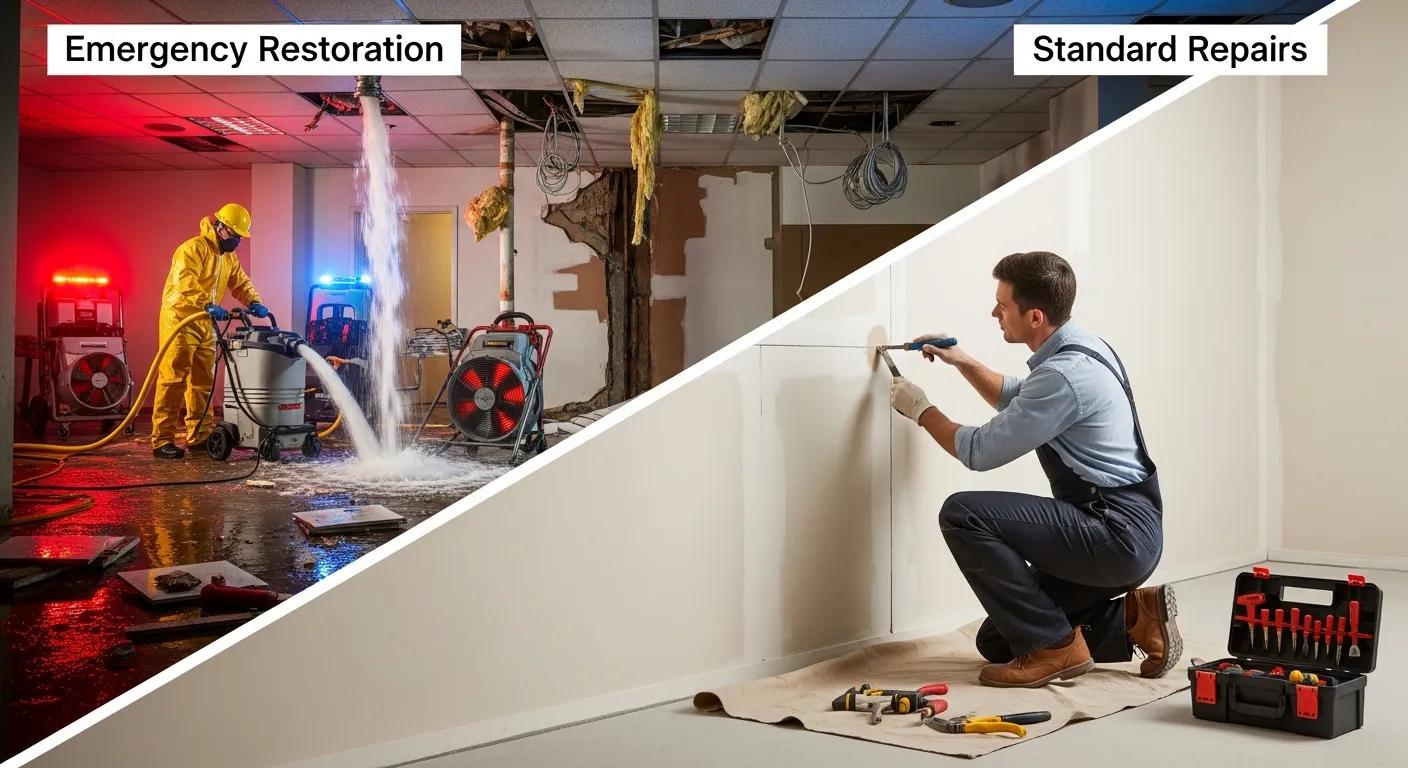
Emergency Property Restoration vs. Standard Repair Services
Emergency Restoration vs. Standard Repairs: What to Expect
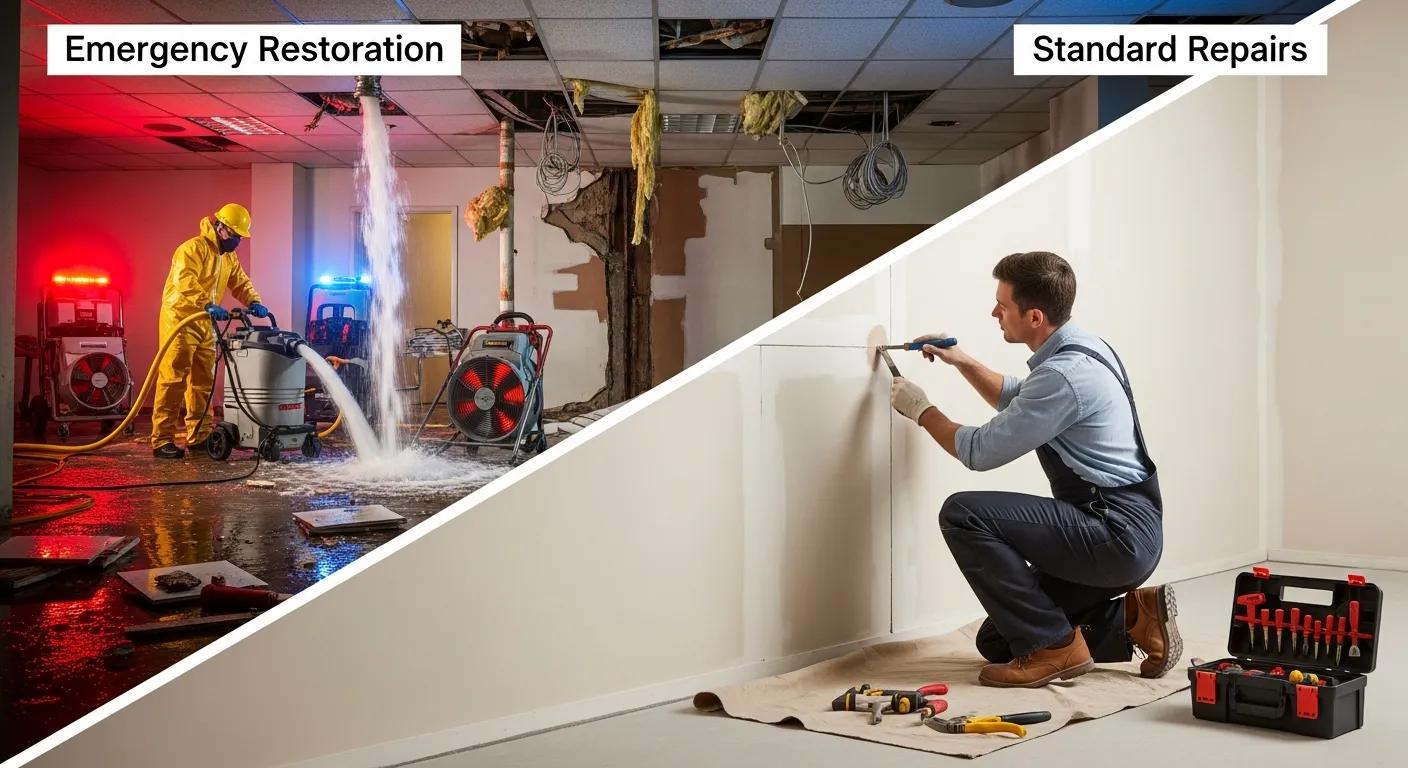
When property damage happens, knowing the difference between emergency property restoration and standard repair services helps you move quickly and avoid costly surprises. Emergency restoration is about fast action — think water from a burst pipe or fire damage — to stop further loss and make the home safe. Standard repair services follow once the immediate risk is managed, focusing on full repairs and finishing work over a planned timeline. Below, we outline the key differences, explain the insurance claims process, and show how Adjustering can help you through each step.
What Is Emergency Property Restoration and How Does It Differ from Standard Repair Services?
Emergency property restoration is the immediate response after damage from floods, fires, severe storms, or similar events. These teams act quickly to reduce ongoing damage, secure the structure, and protect occupants. Because time matters, responders bring specialized equipment and experience to assess and stabilize the situation right away.
Defining Emergency Restoration: Urgency and Disaster Recovery Explained
Emergency restoration is about containment and stabilization. For example, a burst pipe needs rapid water extraction to prevent mold and structural harm. After a fire, crews board up openings, remove debris, and begin smoke and soot cleanup. Faster intervention reduces long-term damage and often lowers overall repair costs.
Scope and Timing of Standard Repair Services Compared
Standard repair services pick up after emergency responders have secured the property. These crews complete the rebuild: replacing materials, repairing structure, repainting, and restoring finishes. The scope and schedule depend on damage extent and complexity, and projects can take weeks to months from start to finish.
How Do Insurance Claims Work for Emergency Restoration and Standard Repairs?
Insurance claims can be confusing during a stressful recovery. Knowing the basic steps for both emergency restoration and later repairs helps you preserve coverage and get a fair settlement.
Steps to Filing Insurance Claims for Property Damage
- Document the Damage: Photograph affected areas, note dates and times, and keep records of any emergency actions taken.
- Contact Your Insurance Provider: Report the loss quickly so your insurer can open a claim and advise on next steps.
- Submit Required Documentation: Provide photos, repair or restoration estimates, receipts for emergency services, and any other requested evidence.
- Follow Up: Keep in regular contact with your insurer and retain copies of all communications until the claim is resolved.
Role of Public Adjusters in Maximizing Insurance Settlements
Public adjusters advocate for policyholders during the claims process. They ensure damage is fully documented, prepare accurate estimates, and negotiate with insurers so your claim reflects the true scope of loss. Working with a qualified public adjuster can make a meaningful difference in the settlement you receive.
What Are the Typical Costs and Timelines for Emergency Restoration vs. Standard Repairs?
Knowing typical costs and timelines helps you plan and set expectations while recovery is underway.
Comparing Restoration and Repair Costs: What to Expect
Emergency restoration costs vary by damage type and response needs. As an example, water damage restoration can range from $1,000 to $7,000 depending on severity and affected areas. Standard repairs are often priced based on the work scope and materials required, so those figures can vary widely.
Understanding Restoration and Repair Duration and Scheduling
Emergency restoration tasks are usually completed within 24–72 hours for initial mitigation and stabilization, depending on the situation. Standard repair work can take much longer — commonly 4–12 weeks — especially when reconstruction or permits are involved.
| Service Type | Cost Range | Typical Timeline |
|---|---|---|
| Emergency Restoration | $1,000 - $7,000 | 24-72 hours |
| Standard Repairs | Varies widely | 4-12 weeks |
This table highlights the immediate, time-sensitive nature of emergency restoration compared with the broader scope and longer timelines of standard repairs.
How Can Adjustering Assist with Emergency Property Restoration and Insurance Claims?
Adjustering helps property owners manage the practical and paperwork parts of recovery. We combine insurance expertise with a network of trusted restoration professionals so you can focus on getting your property back to normal.
Expert Advocacy and Transparent Communication Benefits
We act as your advocate and keep communication clear throughout the claim. That means we help gather documentation, explain options, and keep you informed at every step — reducing stress and helping avoid costly mistakes.
Connecting to Qualified Restoration Professionals in Philadelphia
We also connect clients to vetted restoration contractors in Philadelphia who handle water, fire, and storm damage. Our network simplifies coordination so repairs proceed smoothly while we manage the insurance and claims side. For restoration-specific services, learn more at our restoration page.
To talk with our team or get started, visit our contact page. We're here to help you through the recovery process.
Understanding the difference between emergency restoration and standard repairs helps you decide what to do first and how to work with your insurer. With Adjustering guiding the process, navigating claims and repairs becomes clearer and more manageable.
Frequently Asked Questions
What types of disasters typically require emergency restoration services?
Emergency restoration is needed after events that create immediate risk or ongoing damage: heavy flooding, burst pipes, fires, and severe storm damage are common examples. These incidents can escalate quickly, so prompt mitigation — like water extraction or boarding up after a fire — is critical to limit further loss.
How can I prepare my property for potential emergencies?
Preparation starts with regular maintenance and an emergency plan. Inspect plumbing and roofing, keep gutters clean, and update old wiring when needed. Compile a list of emergency contacts including your insurer and trusted restoration professionals, and assemble a basic emergency kit. These steps reduce damage and speed recovery if an incident occurs.
Are there specific certifications to look for in restoration professionals?
Yes. Look for IICRC certification—this shows technicians follow industry best practices. Also confirm any contractor is licensed and insured, and check for specialty credentials in mold remediation or fire restoration when applicable. Certifications protect you and ensure work meets professional standards.
What should I do if my insurance claim is denied?
First, review the denial to understand the insurer’s reason. Often, supplying missing documentation or clarifying coverage can reopen the claim. If needed, consider appealing and work with a public adjuster who can reassess the loss and negotiate on your behalf to pursue a fair outcome.
How can I ensure my restoration project stays within budget?
Get multiple estimates and ask for clear, itemized bids. Communicate your priorities and budget limits upfront, and consider phased repairs if full restoration isn’t immediately affordable. Track progress and costs regularly and keep open lines with your contractor to address changes before they add up.
What are the long-term effects of delaying restoration services?
Delaying restoration can make damage worse and more expensive to fix. Water left untreated can lead to mold and structural decay; fire-related damage can cause lingering smoke and corrosion problems. Delays can also complicate insurance claims and reduce property value. Acting quickly minimizes these risks and preserves more of your home’s condition.
