Early Warning Signs Your Basement Has Moisture Problems
Early Warning Signs Your Basement Has Moisture Problems — A Practical Guide for Homeowners & Business Owners

Basement moisture happens when excess water or high humidity gets into lower-level spaces. Left unchecked, it can damage structures, worsen indoor air quality, and encourage mold growth — all of which threaten health and reduce property value.
This guide breaks down how moisture enters basements, why spotting problems early matters for safety and insurance, and practical steps homeowners and business owners can take to diagnose and address issues. You’ll find the most common early warning signs — musty odors, peeling paint, efflorescence, stains, and cracks — plus simple DIY checks like the plastic-sheet test and hygrometer monitoring. We also explain when it’s time to call professionals and how coordinated help from licensed public adjusters and vetted restoration contractors protects claims and speeds repairs. Read on for clear detection steps, EAV-style comparison tables to aid decisions, and recommended next steps if you find signs of basement water intrusion.
Why Early Detection of Basement Moisture Actually Matters
Moisture in the basement is often the first sign of water intrusion or persistent humidity, and small issues can quickly become costly problems. Early detection limits damage to walls and floors, reduces mold spread that can trigger respiratory problems, and preserves documentation needed for insurance claims. Below are the main risks that make acting early important, followed by the specific warning signs to watch for. Spotting problems early lets property owners choose targeted actions — inspection, containment, or professional help — before minor dampness turns into a major loss.
- Structural weakening: Repeated saturation can cause concrete and mortar to spall, crack, or lose strength.
- Health hazards: Mold growth raises allergen and mycotoxin exposure, which can affect occupants’ breathing and overall health.
- Financial consequences: Waiting to report or fix water issues can complicate insurance claims and lower recoverable payouts.
With those risks in mind, the next section covers the common signs you can spot quickly during a basement walk-through.
What Happens If You Ignore Basement Moisture?
Putting off basement moisture problems lets them widen and deepen — affecting the building’s structure, indoor air quality, and resale value. Mold and mildew thrive on damp surfaces and release spores that may cause allergic reactions or chronic respiratory symptoms, especially in children and older adults. Over time, water exposure can erode concrete, make foundation cracks worse, and warp floors or framing, driving repair costs well above what early fixes would have required. The health and financial risks make prompt documentation and remediation essential — and they simplify insurance recovery.
That raises a practical question: how common are water-related losses, and what do the numbers say about acting quickly?
How Water-Damage Statistics Show the Value of Acting Fast
Industry data consistently lists water-related incidents among the top causes of homeowner insurance claims. Even small events can lead to thousands in repair costs if secondary damage — like mold remediation or structural fixes — is allowed to develop. Fast drying and professional documentation reduce the chance secondary damage inflates costs or complicates coverage decisions. In short: noticing early signs and moving quickly often yields better claim outcomes and faster restoration timelines.
Next, we’ll outline the common early warning signs and how to interpret them at a glance.
Common Early Warning Signs of Basement Moisture

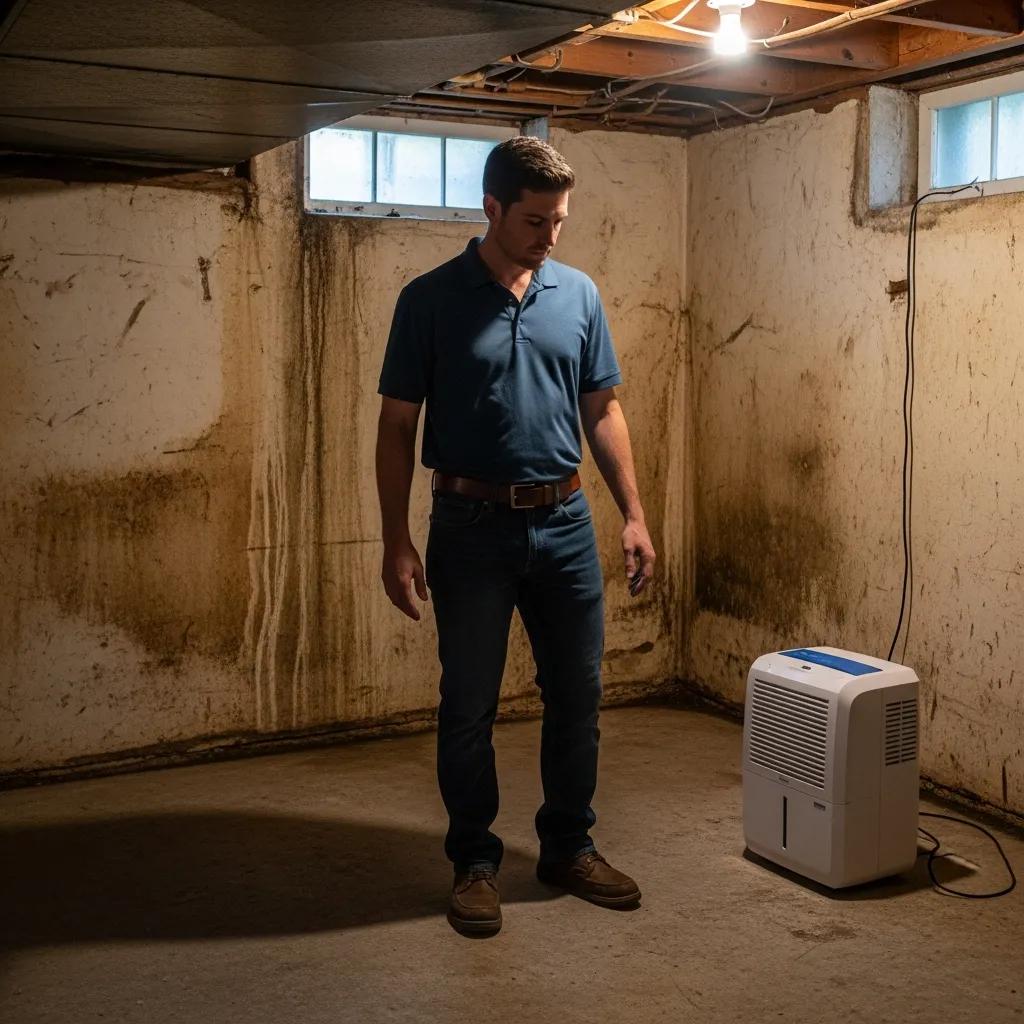
Basement moisture usually makes itself known through a few consistent sensory and visual clues. Musty smells, peeling or blistered paint, white powdery efflorescence on masonry, water stains, and small foundation cracks are typical early symptoms. Each points to different causes, from airborne humidity to groundwater seepage. Use the quick-reference table below to match signs to likely causes, how to spot them, and how urgently to act during a visual sweep of your basement.
| Warning Sign | Likely Cause | How to Spot It | Urgency |
|---|---|---|---|
| Musty smell | Mold or mildew fed by high humidity or hidden leaks | Persistent, damp odor near walls, stored boxes, or HVAC runs | High |
| Peeling / bubbling paint | Moisture trapped behind wall finishes | Flaking paint, blisters, or soft plaster where paint separates | Medium–High |
| Efflorescence (white powder) | Groundwater or vapor moving through masonry | Chalky white residue on block or concrete walls | Medium |
| Water stains | Active or past leaks | Discolored patches, tide lines, or dark streaks on walls/floor | High |
| Small foundation cracks | Settlement, freeze-thaw, or hydrostatic pressure | Hairline to wider cracks; may feel damp to the touch | Medium–High |
The table helps prioritize inspections and next steps. The following subsections explain how to interpret specific signs — starting with musty odors — and what tests you can run next.
How a Musty Smell Points to Moisture Problems
A persistent musty odor in the basement usually signals microbial growth — mold or mildew — fed by hidden moisture from leaks, condensation, or elevated relative humidity. Porous materials like cardboard, drywall, and wood can absorb moisture and host fungal growth; the smell is often strongest near walls, behind stored items, or around HVAC components. As a first step, ventilate the area, remove or dry wet items, and run a dehumidifier if you have one. If the smell remains after drying, arrange a deeper inspection for hidden leaks and consider professional testing. Addressing the source quickly reduces exposure and helps keep spores from spreading to living areas above.
After a musty smell, most homeowners check walls and floors for visible evidence — covered next.
Visible Wall and Floor Signs That Reveal Moisture Issues
Visible symptoms — peeling paint, blistered plaster, dark water stains, efflorescence, or standing puddles — point to different moisture pathways, from surface condensation to groundwater intrusion. Peeling paint usually means moisture is trapped behind a finish; efflorescence shows soluble salts carried by migrating water; stains and tide lines trace leaks or past flooding. When you find these signs, photograph their locations and sizes, note whether they appear after rain, and assess recurrence. Combining photos with odor or moisture readings strengthens your case for remediation and, if needed, professional evaluation of structural concerns.
Next, we cover practical DIY tests and inexpensive tools that help confirm whether moisture is transient or persistent.
DIY Ways to Detect Basement Moisture

DIY detection pairs visual checks with simple tests and affordable tools to determine if moisture is momentary or chronic and to locate likely entry points. Common steps include the plastic-sheet test for slab moisture, spot checks with moisture meters, and continuous monitoring with hygrometers. The table below compares these tools, how and when to use them, and what their results typically mean so you can decide whether to escalate to professional help. These methods also help document conditions for insurance claims when needed.
| Test / Tool | What It Does | When to Use It |
|---|---|---|
| Plastic sheet test | Shows if moisture is evaporating through the slab by checking for condensation under a taped sheet | Initial check for slab-driven moisture |
| Moisture meter | Reads moisture content in wood, drywall, or masonry with probes or pinless sensors | Spot-checks where stains, dampness, or odors appear |
| Hygrometer | Records relative humidity (%) over time | Ongoing monitoring to flag RH consistently above about 60% |
| Visual inspection checklist | Systematic scan of walls, floors, seams, plumbing, and HVAC | First pass to identify signs and decide which tests to run |
Use this table to pick the right test for your situation and to establish thresholds that suggest professional assessment. Below we give step-by-step instructions for the plastic-sheet test and tips for using meters and hygrometers.
How to Do the Plastic Sheet Test
The plastic-sheet test is a quick way to tell if moisture is coming from a concrete slab or from the air. You only need a clear plastic sheet, tape, and 24–48 hours. Tape a roughly 2×2-foot sheet to the floor, press out air, and mark the edges. After 24–48 hours, look for condensation on the underside of the sheet and any darkening of the slab inside the taped perimeter. Condensation or a darker slab indicates moisture moving up from the slab (suggesting sub-slab vapor or groundwater); a dry result points to airborne humidity or temporary surface wetting. The test helps decide whether you need sub-slab vapor mitigation or exterior drainage fixes.
Once you have plastic-sheet results, use moisture meters and hygrometers for more detailed measurement if needed.
When to Use Moisture Meters and Hygrometers
Moisture meters and hygrometers give objective readings that separate chronic problems from short-term wetting. A hygrometer tracks ambient relative humidity over several days — sustained readings above about 60% are a red flag — while a moisture meter checks material moisture in walls, baseboards, and framing where you see evidence. For reliable documentation, take multiple spot readings across suspect areas in a grid pattern and log readings with dates and conditions. Persistent elevated readings mean you should seek professional assessment or remediation. These tools bridge what you can see and smell with the diagnostics professionals will use.
After DIY checks, you’ll want to know when to bring in specialists. That’s the next section.
When to Call Professionals for Basement Moisture
Contact professionals if you have standing water, visible mold covering several square feet, structural cracks, repeated or unexplained leaks, or if an insurance claim is likely — situations where DIY measures aren’t enough. Licensed public adjusters advocate for policyholders in documenting damage and negotiating claims; restoration contractors handle mitigation, drying, mold remediation, and repairs. The table below summarizes these professional roles, typical services, and when to hire each. If you prefer coordinated support, Adjustering can connect you with licensed public adjusters and vetted restoration contractors to streamline inspection, documentation, and repair work.
| Professional Role | What They Do | When to Hire |
|---|---|---|
| Public adjuster | Inspect and document damage, prepare detailed estimates, and negotiate with your insurer on your behalf | Major water events, complex claims, or disputed coverage |
| Restoration contractor | Extract water, dry structures, remediate mold, and perform structural repairs | Standing water, mold greater than ~10 sq ft, or structural impacts |
| Structural engineer | Evaluate foundations, load-bearing elements, and the severity of cracks | Significant cracking, settlement, or suspected foundation failure |
This matrix helps you match the problem to the right professional and shows when a combined adjuster–contractor response is most effective. The sections below explain what public adjusters and restoration contractors do in practice.
How Licensed Public Adjusters Help with Claims
Licensed public adjusters advocate for policyholders by performing thorough inspections, documenting losses with photos and measured estimates, and preparing claim submissions that reflect the full scope of damage. Their process typically includes an initial inspection, a detailed inventory and estimate, submission and negotiation with the insurer, and follow-through through settlement. Early involvement preserves evidence, establishes timelines, and reduces the risk of denials due to delayed reporting or incomplete documentation. For complex or high-value water damage, an adjuster’s knowledge of policy language and claim strategy can meaningfully improve recovery.
Knowing how an adjuster supports your claim helps explain the role restoration contractors play in remediation and repair.
How Restoration Contractors Fix Basement Moisture and Mold
Restoration contractors work in phases: mitigation (water removal and containment), drying (industrial dehumidifiers and air movers), mold assessment and remediation, and then repair and restoration to return spaces to use. Quick mitigation limits ongoing damage and controls mold growth; documented drying and remediation help support insurance claims by showing professional effort and expense. Contractors often share moisture logs, photos, and scopes of work with adjusters so estimates and claims align, which speeds approvals. When structural repairs are needed, contractors coordinate the necessary trades and follow industry standards for moisture control and mold remediation.
A coordinated adjuster–contractor approach reduces claim friction and shortens restoration timeframes. That brings us to prevention: how to cut the risk of repeat events.
How to Prevent Future Basement Moisture Problems
Prevention combines exterior drainage fixes, interior humidity control, regular maintenance, and occasional professional upgrades. Exterior steps — functioning gutters, proper grading, downspout extensions, and French drains — keep water away from the foundation; interior steps — dehumidifiers, adequate ventilation, and a reliable sump pump with backup — manage moisture that gets inside. The list below covers practical seasonal actions you can take to keep basements dry and reduce the chance of mold or structural damage returning. Pairing DIY upkeep with professional upgrades when necessary provides the best long-term protection.
- Maintain gutters and downspouts: Keep them clear and direct water several feet away from the foundation.
- Grade soil away from the foundation: Make sure surface runoff moves away from the building.
- Install or maintain a sump pump: Use a pump with a reliable float and consider a battery backup for outages.
- Control interior humidity: Use a dehumidifier sized for your basement and monitor with a hygrometer to keep RH under 50–55%.
Regular seasonal checks and prompt repairs reduce repeat incidents and keep documentation current for insurance purposes. If you prefer professional installation of drainage systems, sump pumps, or full basement waterproofing, Adjustering can coordinate vetted contractors and licensed public adjusters to ensure work is properly documented and claim-ready when appropriate.
Exterior Drainage Options That Help Keep Basements Dry
Exterior drainage — clear gutters and downspouts, proper site grading, and French drains — prevents surface water from reaching foundation walls and lowers hydrostatic pressure that forces water into basements. Gutters and downspouts should discharge away from the foundation; regrading or swales move runoff downhill; French drains and exterior waterproofing handle chronic groundwater problems by collecting and redirecting subsurface water. Professional excavation and installation are recommended when grading changes are extensive or when persistent seepage suggests exterior systems have failed — proper solutions require a site assessment and drainage design. Investing in exterior drainage tackles root causes and reduces long-term repair needs.
These exterior steps pair with interior measures to control humidity and handle incidental intrusion, covered next.
Interior Measures That Reduce Basement Humidity
Interior measures focus on controlling ambient humidity and removing incidental water before it becomes a bigger issue: use dehumidifiers, improve airflow, and install properly-sized sump pumps. Pick a dehumidifier rated for your basement’s square footage and humidity load, aim for RH below 50–55%, and place the unit for even airflow; maintain filters and coils for reliable performance. Choose a sump pump sized for expected inflow, install a tested check valve, and consider battery or generator backup for power outages. Improving airflow — opening vents, using mechanical ventilation where appropriate, and avoiding storage directly against cold walls — cuts condensation and shrinks mold-friendly microclimates.
Combining these interior actions with sound exterior drainage and periodic professional checks forms a resilient prevention plan and lowers the chance of repeat claims.
Where Adjustering Helps with Basement Moisture Problems
Adjustering connects homeowners and business owners with licensed public adjusters and vetted restoration, roofing, siding, and waterproofing contractors in local regions, providing coordinated support to maximize insurance recoveries and speed repairs. We serve Philadelphia, Bucks, Montgomery, Chester, and Delaware counties, plus South Jersey and Central Jersey — areas where rainfall patterns, freeze–thaw cycles, and soil types create specific moisture risks our network knows how to handle. The sections below list coverage areas and describe Adjustering’s inspection-to-restoration workflow. For property owners in these regions, coordinated adjuster–contractor support reduces confusion and gets repairs started faster.
Which Counties and Regions Do Adjustering’s Services Cover?
Adjustering provides coordinated referrals and support across Philadelphia, Bucks, Montgomery, Chester, and Delaware counties, as well as South Jersey and Central Jersey. These regions see periodic heavy rain, freeze–thaw cycles, and varied soils that can increase the risk of basement water intrusion; our local contractors are vetted for experience with these conditions. Property owners in these counties can request inspections, adjuster referrals, and contractor coordination to document and remediate moisture incidents. For direct assistance, Adjustering’s contact information and office details are available to schedule inspections and referrals.
How Adjustering Coordinates Between Public Adjusters and Contractors
Adjustering’s coordination process focuses on quick referral, a single point of communication, and synchronized documentation: refer → inspect → document → remediate → restore → close claim. After a referral, a licensed public adjuster documents the loss and prepares an estimate while vetted restoration contractors mitigate damage and provide moisture logs, photos, and scopes of work to support the claim; Adjustering facilitates scheduling and communication to keep timelines on track. This coordinated approach reduces duplication, preserves evidence for insurance, and increases the chance of full reimbursement while accelerating repairs and return-to-service. If you’ve noticed early warning signs and need help, contacting Adjustering connects you quickly with licensed adjusters and local restoration experts to begin inspection and documentation.
Frequently Asked Questions
What are the long-term effects of basement moisture problems?
Left over time, basement moisture can cause structural damage — weakened foundations, crumbling mortar, and compromised framing — and create conditions for persistent mold growth. Mold and damp air can lower indoor air quality and contribute to respiratory problems and allergies. These issues increase repair costs and reduce property value, so early detection and remediation are key to protecting health and investment.
How can I tell if my basement has a hidden leak?
Look for subtle clues: unexplained damp spots, a musty odor, or water stains on walls and floors. Inspect around pipes, window wells, and the foundation line. The plastic-sheet test can determine whether moisture is coming up through the slab. If you suspect a hidden leak and can’t locate it, hire a professional who can use specialized tools like thermal imaging or moisture mapping to find the source.
What should I do if I find mold in my basement?
If you find mold, act quickly. Improve ventilation and dry the area. Small patches (under about 10 square feet) can often be cleaned with detergent and water or a commercial cleaner; use protective gear. For larger infestations, or if you have health concerns, hire a professional mold-remediation service to remove mold safely and fix the underlying moisture problem so it doesn’t return.
How often should I check my basement for moisture issues?
Check your basement at least twice a year — ideally during spring and fall — and after heavy storms or flooding events. Seasonal checks catch changes in drainage and moisture levels. Regular inspections help you find early warning signs before they develop into bigger problems.
Can I use a dehumidifier to prevent basement moisture?
Yes. A properly sized dehumidifier is an effective way to keep basement humidity in check. Aim for relative humidity below 50–55% to slow mold growth and reduce condensation. Place the unit centrally for good airflow, empty the collection bucket regularly or set up a drain line, and maintain the unit so it continues to perform.
What are the signs that I need to hire a professional for moisture issues?
Hire a professional if you have standing water, widespread mold, large structural cracks, repeated leaks, or if DIY efforts don’t resolve the issue. Licensed public adjusters and restoration contractors provide expert assessment, documentation for insurance, and remediation strategies to restore your basement safely and effectively.
Conclusion
Finding and fixing basement moisture early protects your property from structural damage, health risks, and unexpected costs. By learning the warning signs and using practical prevention steps, homeowners can keep basements dry and safe. If you need help, our network of licensed public adjusters and vetted restoration contractors can guide inspections, document losses, and manage repairs. Contact us to get professional support and keep your basement secure and healthy.
