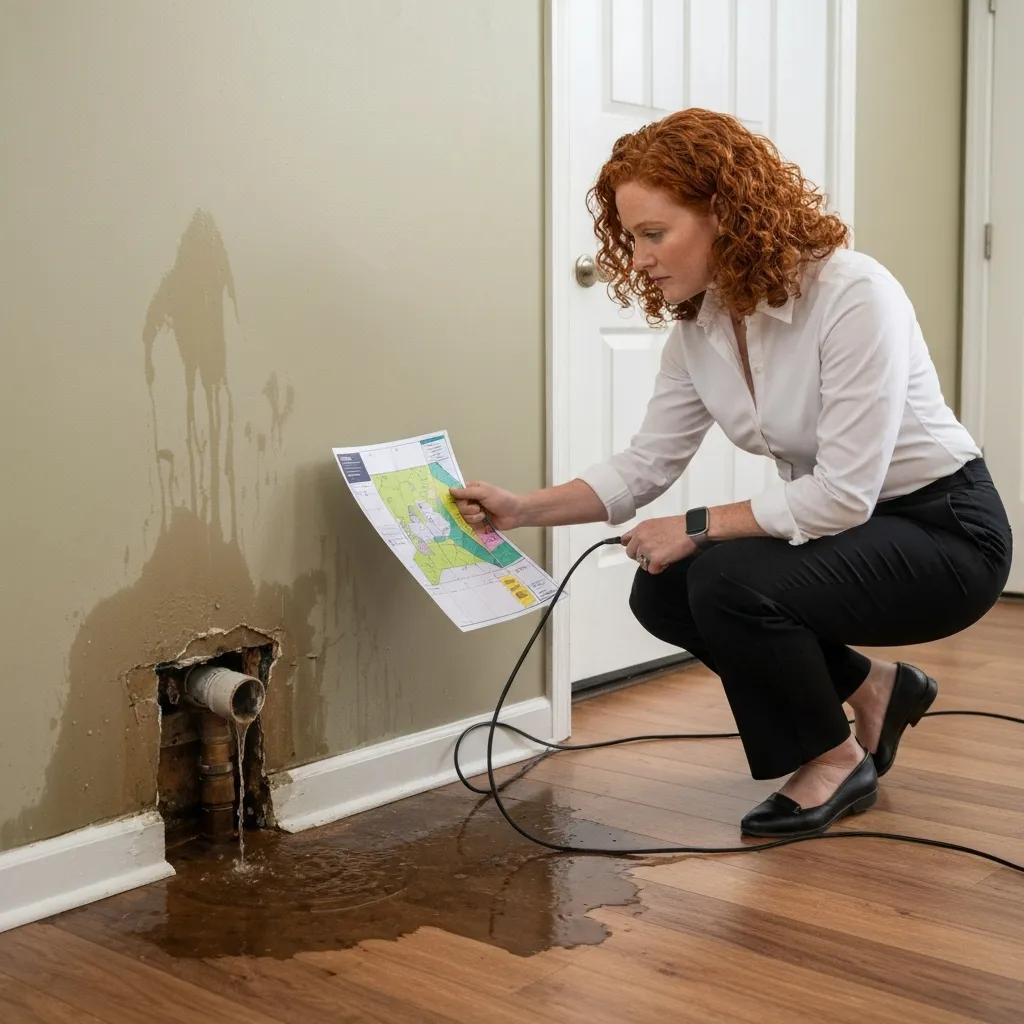
Water Damage Public Adjuster for Insurance Claims
Water Damage Public Adjuster: How to Get the Full Insurance Settlement and Restore Your Property

A water-damage public adjuster is a licensed advocate for the policyholder: they inspect damage, document losses, and negotiate with your insurer to maximize the settlement and get repairs started. This guide explains how public adjusters handle water events—burst pipes, roof leaks, basement floods, and sewage backups—and gives clear, step-by-step actions you can take right after water damage. Homeowners and business owners often feel overwhelmed and underpaid when they manage mitigation, documentation, and insurer communications alone. A competent public adjuster brings technical inspection, a complete scope of loss, and active advocacy to protect your claim. Below we cover what adjusters do, a prioritized 24–72 hour checklist, common water claim types, how to vet local adjusters, tactics that increase settlement value, and answers to typical questions about fees and timing. Practical examples and checklists are included so you can act fast, preserve evidence, and improve the chance of a full, fair payout.
What a Water-Damage Public Adjuster Does for Your Insurance Claim
A water-damage public adjuster documents the loss, determines the full scope of damage, builds a professional estimate, and negotiates with the insurer on your behalf to increase your payout. The role combines technical inspection (moisture mapping, mold-risk assessment) with formal deliverables (damage inspection report and scope of loss). The immediate benefit is twofold: the adjuster finds hidden or secondary damage that increases cost, and they present evidence insurers accept as the basis for higher, more accurate settlements. Good adjusters also coordinate mitigation and restoration so repairs follow the documented scope. The section below lists the core services most adjusters provide and why each matters to your claim.
Core services public adjusters provide for water claims:
- Inspection and moisture mapping: Locate visible and concealed water intrusion to document the complete loss.
- Documentation and estimate preparation: Produce detailed reports and industry-standard estimates to justify repair and replacement costs.
- Negotiation and settlement advocacy: Work directly with carrier adjusters to dispute low offers and secure fair compensation.
- Contractor coordination and mitigation oversight: Ensure emergency drying and repairs align with the claim scope so nothing is missed.
These services combine to prevent overlooked damage and create a defensible claim package that improves settlement outcomes. Seeing this sequence shows why professional advocacy matters when insurers review water-related losses.
How Public Adjusters Support Water Damage Claims
Public adjusters manage emergency response, thoroughly document damage, and convert physical findings into the standard scope and pricing formats insurers expect.
On arrival they perform moisture scans, take systematic photos, log affected materials, and note structural or mold indicators—evidence that becomes the core of the inspection report. They translate observations into a scope-of-loss using recognized estimating software and line-item pricing, which links inspection details to monetary recovery. Adjusters also handle insurer communications, submit supplement requests for uncovered items, and, if needed, pursue appraisal or formal dispute procedures. Understanding this workflow helps homeowners see how inspection and negotiation together raise claim value and avoid premature denials.
Why Choose a Licensed, Local Public Adjuster?
Local, licensed adjusters matter because they know regional building codes, common weather-related damage patterns, and the tendencies of area insurance carriers. A nearby adjuster can inspect quickly, coordinate with local mitigation and restoration contractors, and anticipate region-specific claim pitfalls—like storm-related exclusions common in your area. Verify credentials by checking state licensing, asking for sample reports, and requesting recent local references; these checks confirm technical skill and responsiveness. Local knowledge shortens mitigation delays and evidence collection, reducing the chance of secondary damage and strengthening your claim.
Once you understand the adjuster’s role, you’ll want vetted help fast. Adjustering connects homeowners and businesses to licensed public adjusters and vetted restoration, roofing, and siding contractors across Philadelphia, Bucks, Montgomery, Chester, and Delaware counties, plus South Jersey and Central Jersey.
That networked approach removes confusion by aligning inspection, documentation, and contractor estimates so nothing is missed—and restoration follows an approved scope. When speed and coordination matter, a trusted local network reduces claim delays and improves outcomes.
How to Navigate a Water Damage Insurance Claim Successfully

Successfully navigating a water-damage claim means quick mitigation, careful documentation, timely insurer notification, and—when appropriate—professional representation to interpret policy language and manage negotiations. The goal is to preserve evidence, limit secondary damage through proper mitigation, and assemble a clear claim file that ties damage to covered perils. Acting fast preserves leverage: insurers evaluate what you present early in the process, and thorough documentation increases the chance of full coverage. Use the prioritized checklist below for the initial response and claim filing.
Priority steps to take after water damage:
- Secure safety and stop the water source: Make sure everyone is safe and shut off water if you can.
- Mitigate to limit further damage: Arrange emergency extraction and drying to prevent secondary loss and mold growth.
- Document everything: Photograph damage from multiple angles, keep damaged items for inspection, and log dates and actions taken.
- Notify your insurer and open a claim: Report the event, share initial documentation, and get next steps from the carrier in writing.
- Consider a public adjuster for complex or large losses: Don’t accept a preliminary carrier estimate without professional review if the loss looks significant.
Following these steps creates a clear timeline for preserving evidence and preparing a claim, and it sets up a smooth handoff if you bring in an adjuster or restoration contractor. The next section lists the documents and records that strengthen your claim.
Steps Involved in Filing a Water Damage Claim
Filing a water-damage claim follows a reliable sequence: secure the site, mitigate loss, document evidence, notify the carrier, and submit a proof-of-loss supported by estimates and receipts. Start by cataloging damaged rooms and contents, capturing timestamped photos, and saving receipts for emergency work like pump-outs or temporary repairs. When you prepare claim paperwork, include the inspection report, the scope of repairs, and any contractor invoices—these tie observed damage to repair costs. Keep a running log of insurer communications—dates, names, and summaries—to create an audit trail. Organized records speed review and reduce disputes over timing and mitigation.
How Public Adjusters Simplify Complex Insurance Procedures

Public adjusters simplify the process by translating policy language into practical claim strategies: they identify relevant endorsements or exclusions, and they structure documentation to counter common insurer objections. When carriers make partial payments or deny items, adjusters present itemized evidence and alternative scopes to justify supplements or higher settlement figures. They manage the back-and-forth of submitting supplements and negotiating line items, removing the administrative burden from the policyholder. By coordinating directly with contractors, adjusters make sure repair scopes reflect necessary work and that change orders are handled to protect the claim.
What Types of Water Damage Claims Can a Public Adjuster Assist With?
Public adjusters handle a wide range of water-related claims: sudden accidental events (like burst pipes), storm-driven leaks and flood-related issues where the policy covers them, sewer or septic backups, and gradual intrusion that reveals deeper structural problems. Each claim type has different evidence and policy considerations—sudden events need proof of accidental onset, while storm claims may require documentation separating wind damage from water damage. Adjusters classify the loss, map moisture and affected assemblies, and tailor documentation so carriers don’t misclassify the claim. The table below summarizes common damage types, typical causes, and what evidence insurers expect.
Common water-damage types, causes, and claim considerations:
| Damage Type | Common Causes | Typical Claim Needs / Considerations |
|---|---|---|
| Burst pipe claim | Freezing, corrosion, joint failure | Proof of sudden accidental rupture and receipts for mitigation |
| Basement flood claim | Surface runoff, poor grading, sump failure | Moisture mapping, content inventory, and mold-risk documentation |
| Roof leak water damage claim | Storm impact, flashing failure, clogged gutters | Evidence of storm exposure, roof inspection, and interior damage logs |
| Sewage backup claim | Blockage, sewer line failure | Sanitation mitigation records and specialized remediation scopes |
Knowing the difference between these claim types helps you collect the right evidence and tailor mitigation strategies to strengthen your position with the carrier.
How to Handle Burst Pipe Insurance Claims
Burst pipe claims demand proof of a sudden accidental event plus documentation of immediate mitigation to limit secondary damage. Start by shutting off the main water, photographing the burst and resulting damage, and preserving wet materials for inspection. Save receipts for emergency plumbing and water extraction, and get moisture readings and drying logs from contractors to show mitigation timelines. Insurers may argue maintenance issues are excluded, so an adjuster will emphasize sudden-onset indicators and build a timeline tying the rupture to the observed loss. This focused documentation improves the chance essential repairs—drywall, flooring, and contents—are covered.
Residential and Commercial Water Damage Claims
Public adjusters handle both residential and commercial claims by scaling valuation, documentation depth, and evidence types. Residential claims focus on structure, contents, and additional living expenses; commercial claims add business-interruption metrics, inventory valuation, and larger restoration scopes. Experienced adjusters use appropriate estimating practices for each sector, including revenue-loss calculations and payroll continuity where needed. Using an adjuster familiar with both residential and commercial work ensures the claim captures all financial impacts and technical repair requirements.
How to Find the Best Water Damage Claim Adjuster in Philadelphia and Nearby Counties
To find a qualified adjuster, check licensing, local experience, references, and whether they have a clear workflow for coordinating inspections and contractor estimates. Prioritize adjusters who can show sample reports, explain their estimating methodology, and describe how they work with vetted restoration contractors to form a cohesive repair scope. Local presence matters: adjusters who know Philadelphia and nearby counties understand regional weather patterns, common building assemblies, and how local carriers typically handle claims. Use the vetting checklist below to evaluate providers quickly and objectively.
Vetting checklist for local public adjusters:
- Verify state licensing; ask for the license number or confirmation process.
- Request recent local references or sample inspection reports to confirm hands-on experience.
- Confirm relationships with vetted contractors and how coordinated scopes are created.
- Ask about response times and how the adjuster documents mitigation and supplements.
These criteria help you compare candidates objectively and identify providers who move quickly to preserve evidence and manage contractor coordination. The table below shows how local resources, credentials, and response expectations translate into claim advantages.
| Local Resource | Credential / Response Time | Why It Matters |
|---|---|---|
| Licensed public adjuster | State license, local claim samples | Confirms legal authority and hands-on local experience |
| Vetted restoration contractor | Trade references, mitigation logs | Ensures emergency work matches the documented scope |
| Regional network coordinator | Coverage across the listed counties | Speeds access to local experts and reduces delays |
What Makes Adjustering’s Network of Licensed Public Adjusters Different?
Adjustering pairs homeowners and businesses with licensed public adjusters and vetted restoration partners, focusing on end-to-end coordination so the claims process is clear and efficient. Our network matches policyholders with adjusters who know how to document water damage, spot hidden issues like mold or concealed moisture, and create industry-standard estimates. By bringing adjusters and contractors together early, inspection findings immediately inform mitigation and repair scopes—reducing gaps between what’s documented and what’s repaired. Operating across Philadelphia, Bucks, Montgomery, Chester, and Delaware counties and into South Jersey and Central Jersey, we prioritize local availability and coordinated workflows to maximize compensation and restore properties faster.
How Quickly Can You Access Local Water Damage Experts?
Speed matters: early inspection and prompt mitigation limit mold growth and structural deterioration that complicate coverage. To speed triage, provide clear photos, a timeline of the event, and any evidence you’ve preserved—this shortens the initial review. Local networks that prioritize urgent cases typically coordinate rapid inspections and mobilize mitigation contractors to start drying and cleanup, which strengthens documentation for the insurer.
Preparing a short packet of photos, a damage log, and copies of your policy declarations can help experts act quickly and decisively.
How Public Adjusters Increase Your Water Damage Insurance Settlement
Public adjusters increase settlement value by uncovering hidden damage, creating accurate scopes and pricing, and coordinating contractor documentation that substantiates higher repair costs. The process is simple: careful inspection (moisture mapping and mold assessment) reveals secondary damage; industry-standard estimating software turns that into a defensible price; coordinated contractor proposals and change-order procedures validate necessary repairs for the insurer. This integrated workflow raises the documented claim value and limits the insurer’s ability to underpay or omit required repairs. The table below outlines common claim actions, who performs them, and how they affect payout.
| Claim Action | Who Does It | Benefit to Payout |
|---|---|---|
| Detailed moisture mapping | Public adjuster / inspector | Finds hidden damage that increases the scope |
| Line-item estimate creation | Public adjuster using estimating software | Generates defensible pricing insurers recognize |
| Contractor-scoped repair bids | Vetted restoration contractor | Validates repair necessity and pricing |
| Supplement management | Public adjuster | Captures additional work discovered during repairs |
This sequence—inspect, estimate, coordinate, supplement—builds a credible claim narrative that supports fuller compensation and ensures restoration aligns with what’s approved.
Damage Often Missed Without Professional Inspection
Items frequently missed include water trapped in wall cavities, saturated insulation, subfloor moisture, corrosion of structural fasteners, and early-stage mold growth. These hidden conditions can significantly raise repair costs if not documented early. Moisture mapping and thermal imaging detect saturated assemblies that a visual check misses, and lab or surface testing can document microbial growth. Without these measures, insurers may approve only surface-level repairs, leaving you to pay for later failures. Early professional inspection preserves evidence, quantifies hidden damage, and supports supplements when contractors uncover additional work during restoration.
How Adjusters Coordinate with Contractors for Complete Restoration
Adjusters share inspection reports and moisture data with vetted contractors so mitigation and repair scopes reflect the documented loss, then they track change orders and insurer approvals through restoration. The process starts with a joint review of the scope of loss, followed by contractor mobilization for drying and repairs that match the estimate. If contractors find more damage, the adjuster prepares supplements and negotiates for extra funds before final sign-off. Final inspections and quality checks ensure repairs match the approved scope, helping close the claim without unresolved damage or cost shortfalls.
Common Questions About Water Damage Public Adjusters and Claims
Property owners commonly ask about fees, timing, and when to hire a public adjuster; clear answers reduce hesitation and encourage prompt action after damage. Typical concerns include how adjusters charge, whether early engagement affects coverage, and how adjusters interact with restoration contractors. The FAQ below answers those questions and explains how to connect with Adjustering’s network if you want immediate, coordinated help.
How Much Do Public Adjusters Charge for Water Damage Claims?
Most public adjusters work on a contingency basis or charge a pre-agreed percentage of the claim settlement—fees tied to the recovery amount rather than hourly billing. The fee arrangement is disclosed in a written agreement that spells out the percentage, any conditions, and dispute-resolution terms. Fee factors include claim complexity, geographic scope, and whether supplements or appraisal are required. Before hiring, request a clear written contract that explains the fee model, termination terms, and how funds are disbursed to avoid surprises.
When Should You Contact a Public Adjuster After Water Damage?
Contact a public adjuster right away if the loss is large, involves structural or mold concerns, impacts business operations, or if the insurer’s initial estimate looks incomplete. Early involvement preserves evidence and helps document the full scope. For smaller, straightforward claims you may begin with mitigation and a careful submission, but if you suspect hidden damage or coverage gaps, an early adjuster review can protect your rights. If mitigation has already started, gather mitigation logs, photos, and receipts to speed the adjuster’s assessment. When in doubt, consult an adjuster to determine whether professional representation will materially improve your settlement.
If you need coordinated help after water damage, Adjustering connects policyholders with licensed public adjusters and vetted restoration, roofing, and siding contractors across Philadelphia, Bucks, Montgomery, Chester, and Delaware counties, as well as South Jersey and Central Jersey. Our approach emphasizes fast local access to experts, thorough inspections so nothing is missed, and coordinated adjuster-contractor workflows designed to maximize compensation and restore property. If you want a simpler way to align inspection, documentation, and repairs after water damage, reach out to a local network that prioritizes rapid assessment and coordinated restoration.
Frequently Asked Questions
What should I do immediately after experiencing water damage?
First, ensure everyone’s safety and stop the water source if you can. Next, arrange emergency extraction and drying to limit further damage and mold growth. Document the damage with photos and preserve damaged items for inspection. Notify your insurer to start a claim, and consider a public adjuster if the loss is significant or complicated. Acting fast preserves evidence and helps secure a fair settlement.
How can I tell if I need a public adjuster for my water damage claim?
Contact a public adjuster if the damage looks extensive, there are structural or mold concerns, your business is affected, or the insurer’s initial estimate seems low. Adjusters can uncover hidden damage and make sure the claim reflects the true cost to repair. Even for smaller losses, if you’re unsure about coverage or hidden issues, a consult with an adjuster can clarify your options.
What types of documentation should I gather for my water damage claim?
Collect photographs of the damage, receipts for emergency services, and logs of mitigation efforts. Keep records of all communications with your insurer—dates, names, and summaries. Include any inspection reports, contractor estimates, and your policy declarations. Organized documentation supports your claim and helps ensure necessary repairs are covered.
How do public adjusters determine the value of my water damage claim?
Adjusters perform a thorough inspection to find visible and hidden damage, then use industry-standard estimating software to build a detailed scope of loss with line-item pricing. This process includes moisture mapping and assessing mold risk. A well-supported claim package lets adjusters argue for a settlement that reflects the full extent of the damage.
Can I still file a claim if I have already started repairs?
Yes—you can file after repairs begin, but document everything carefully. Save photos of the damage before repairs, keep receipts for materials and services, and log the work completed. A public adjuster can help ensure your claim accounts for all necessary repairs and that you receive appropriate compensation even if work started before filing.
What are the benefits of using a local public adjuster?
Local adjusters bring practical advantages: familiarity with regional building codes, common local damage patterns, and area carrier practices. They can respond quickly, coordinate with nearby contractors, and avoid local claim pitfalls. That local expertise often speeds the process and improves the chance of a favorable settlement.
How long does the water damage claims process typically take?
Timing varies with claim complexity, insurer responsiveness, and the extent of damage. Insurers typically must acknowledge a claim within a set period—often about 15 days—but full resolution can take weeks to months, especially when negotiations or disputes arise. A public adjuster can help move the process along and ensure thorough documentation is submitted to the insurer.
