Get Mold Claim Help – Your Trusted Adjuster Awaits
Mold Damage Public Adjusters: Maximize Your Insurance Settlement and Restore Your Property

Licensed mold damage public adjusters represent policyholders during mold-related insurance claims. They combine forensic documentation, policy analysis, and contractor coordination so property owners recover the full, allowable payment and complete repairs. This guide explains how a mold damage public adjuster works, why mold claims mix technical and health issues, and which immediate actions protect coverage and occupants. You’ll get practical guidance on how Pennsylvania and New Jersey policies typically treat mold, which clauses and endorsements change outcomes, and a step‑by‑step claim workflow from discovery through remediation and final clearance. We cover inspection and documentation best practices, common insurer tactics, and how a coordinated adjuster–contractor approach ensures compliant, complete repairs. Regional notes for Philadelphia, Bucks, Montgomery, Chester, and Delaware counties, plus South and Central Jersey, are included, along with FAQs to help you decide when to request a free policy review or bring in a public adjuster.
Why Mold Damage Claims Need Specialist Public Adjusters
Mold is often a hidden result of water intrusion, and proving proximate cause decides whether a claim is covered and how much the insurer will pay. A specialist public adjuster pairs forensic evidence—moisture maps, dated photos, and lab results—with precise policy language to overcome exclusions, sublimits, and denials that commonly shrink payouts. Early action preserves evidence and limits health risks insurers may attribute to neglect. The sections below unpack the health and structural urgency behind mold claims and outline insurer tactics property owners should expect.
Health and Structural Risks from Mold
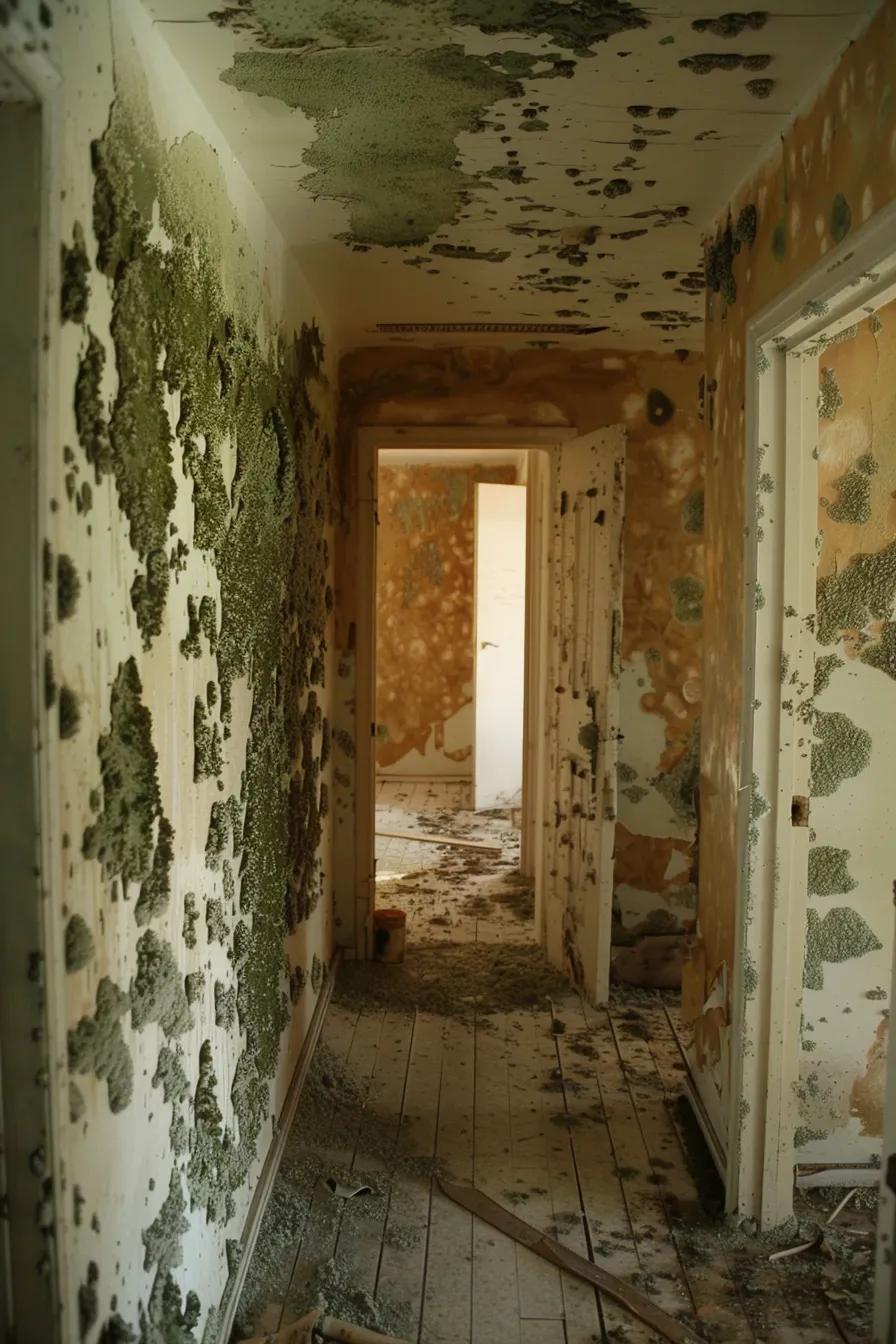
Mold exposure can trigger respiratory irritation, allergic reactions, and worsen chronic conditions for sensitive occupants—so early detection and containment are a health priority. From a building perspective, hidden moisture causes wood rot, damaged sheathing, and progressive material failure that quickly increases the scope and cost of repairs. Those health and structural impacts affect claim value: documented medical or habitability issues and ongoing structural loss justify replacement work, code upgrades, and additional living expense claims. Because insurers often challenge late discovery or weak documentation, time‑stamped testing and professional assessment are critical to protect coverage and occupant safety.
How Insurers Try to Limit Mold Payouts
Insurers commonly reduce mold payouts using three approaches: imposing sublimits that cap remediation, citing exclusions for long‑term neglect or maintenance failures, and narrowing scope through selective testing or strict causation claims. They may demand specific tests or attribute mold to an excluded source unless the claimant provides clear forensic proof of a covered, sudden event—like a burst pipe or storm roof failure. Public adjusters fight these tactics by documenting the moisture source and damage timeline, compiling professional reports, and documenting habitability or medical impacts to strengthen negotiation position. The following points summarize practical countermeasures.
- Typical insurer strategies: sublimits, exclusion arguments, and narrow causation positions.
- Professional testing and dated documentation counter selective testing and scope limitations.
- Prompt mitigation reduces progressive damage insurers may characterize as neglect.
That overview leads into how to read and apply regional policy language in Pennsylvania and New Jersey.
Understanding Mold Coverage in Pennsylvania and New Jersey
Coverage hinges on whether mold followed a covered peril—usually a sudden, accidental water event—or resulted from excluded, long‑term neglect. Policy language varies by carrier and state practice: many PA and NJ homeowner policies cover mold that follows a covered water loss but may still limit payments with sublimits or endorsements. Timely notice, mitigation, and professional documentation are universal steps to preserve coverage. The table below contrasts common policy clauses and how insurers typically respond so homeowners know what to document first.
| Policy Clause | Typical Attribute | Typical Insurer Response |
|---|---|---|
| Covered Peril (sudden plumbing failure) | Applies when the water event was sudden and accidental | Usually approves coverage if documented quickly |
| Exclusion (wear and tear / neglect) | Characterizes long‑term moisture intrusion as excluded | Often limits or denies payment citing maintenance issues |
| Sublimit (mold remediation cap) | Applies a dollar cap or percentage to mold work | Pays up to the sublimit and may exclude extra structural repairs |
That comparison shows why prompt cause documentation and claims notice are decisive. Next we outline the scenarios homeowners and commercial policyholders commonly encounter.
When Homeowners and Commercial Policies Typically Cover Mold
Homeowners and commercial policies generally cover mold when it directly follows a covered peril—examples include a burst pipe, fire‑sprinkler discharge, or storm‑caused roof breach—provided the loss is reported and mitigated promptly. Commercial policies vary: some include specific mold endorsements that expand coverage, while others use sublimits or exclusions. For example, a sudden pipe burst that soaks structural framing often meets coverage criteria, whereas mold from decades‑old roof leaks frequently falls under exclusions. Always review timing and mitigation obligations to confirm whether coverage applies.
- Covered example: a sudden pipe failure that soaks framing and triggers mold growth.
- Excluded example: long‑standing attic leaks that weren’t reported or repaired.
- Commercial note: endorsements or business policy attachments can change limits or coverage—read them closely.
Understanding those differences clarifies why limits and endorsements directly shape settlement strategy.
How Policy Limits and Endorsements Influence Your Mold Claim
Policy limits and endorsements determine how much an insurer will pay for remediation, whether replacement cost applies, and whether related losses—like temporary housing—are reimbursed. A common issue is a modest mold sublimit that forces negotiation to shift costs to general dwelling limits or to document mandatory code‑upgrade expenses to expand recoverable amounts. The table below links policy elements to settlement effects and shows why a targeted policy review from an experienced adjuster matters.
| Policy Element | What It Limits | Practical Effect on Settlement |
|---|---|---|
| Sublimit for Mold | Specific dollar cap for mold remediation | Can limit funds unless other coverages apply |
| Replacement Cost Endorsement | Makes replacement cost available instead of actual cash value | Increases recoverable funds for full repairs |
| Mold Endorsement | Alters coverage based on endorsement language | Can expand or restrict mold coverage significantly |
Given these variables, a local policy review is often the fastest way to understand how endorsements or sublimits will affect a specific claim. Adjustering connects homeowners and businesses across Philadelphia, Bucks, Montgomery, Chester, and Delaware counties, plus South and Central Jersey, to licensed public adjusters who know these regional policy nuances. Our service acts as a free referral pathway to vetted adjusters and remediation pros, and we offer a free policy review to clarify how endorsements or sublimits apply to your loss.
Step‑by‑Step: Filing a Mold Insurance Claim with a Public Adjuster
Working with a public adjuster follows a clear sequence: secure safety and mitigation, gather evidence fast, review the policy and causation, value and negotiate the claim, then coordinate remediation and final verification. Each stage weakens insurer arguments to deny or limit coverage by creating an expert, dated claim record. Below is a practical, numbered checklist you can follow immediately after discovering mold, with what to expect at each step.
- Secure safety and mitigate damage: Stop the water source, ventilate only if safe, and avoid disturbing mold; photograph actions with timestamps.
- Contact a licensed public adjuster: Early engagement preserves evidence and strengthens causation documentation.
- Professional assessment: Moisture mapping, targeted sampling, and contractor estimates define scope and remediation class.
- Policy review and claim submission: The adjuster prepares a complete claim packet with cause analysis and itemized costs.
- Negotiation and settlement: The adjuster negotiates scope, code upgrades, depreciation, and additional coverages, then coordinates repairs with vetted contractors.
This sequence shows why the earliest steps matter most. The table below translates homeowner actions into their effect on claim strength.
| Action Item | Why It Matters | Expected Claim Outcome |
|---|---|---|
| Document moisture source | Establishes proximate cause | Improves likelihood that remediation is covered |
| Time‑stamped photos | Preserve a damage timeline | Counters insurer delays or denial arguments |
| Obtain contractor estimate | Quantifies remediation scope and cost | Supports a fuller valuation and settlement |
Adjustering coordinates this process by offering a free claim review and rapid referral to licensed local adjusters and vetted contractors. Typical flow: a quick triage call, a match to a licensed public adjuster in your county, and a collaborative handoff to restoration pros who perform testing and remediation under the adjuster’s documented scope. That coordination reduces homeowner paperwork while keeping professional control over both claim and repair workflows.
How Adjustering Connects You to Licensed Mold Damage Public Adjusters
Adjustering is a referral service that links homeowners and businesses to licensed public adjusters and vetted remediation contractors across our Pennsylvania and New Jersey service area. After a free claim or policy review, we match your case to a nearby licensed adjuster familiar with regional insurers and local code requirements. Fast matching matters because early forensic documentation and mitigation preserve coverage and occupant safety. Our vetting emphasizes proper licensing and restoration partnerships while remaining neutral—we simply make access to qualified, local adjusters fast and low friction.
What Happens During Assessment and Policy Review?
During assessment, licensed adjusters or environmental specialists perform a visual inspection, moisture mapping with instruments, and targeted sampling if required to map contamination and find the moisture source. A parallel policy review identifies covered perils, sublimits, endorsements, limits, and timing obligations that drive claim strategy. The adjuster then links inspection findings to policy language and compiles a documented claim package—lab reports, contractor estimates, and a remediation plan—to create a defensible narrative for negotiation.
How Public Adjusters Document and Negotiate Mold Claims for Maximum Recovery

Public adjusters build a claim dossier with time‑stamped photos, moisture maps, lab test results, itemized contractor scopes, and line‑item cost estimates that together prove causation and full remediation need. Valuation tactics include claiming replacement cost for damaged materials, documenting code upgrades, adding overhead and profit, and pursuing lost use or additional living expenses when displacement is necessary. Negotiations rebut insurer exclusions with expert reports and present comprehensive scopes to avoid piecemeal settlements. If disagreements persist, adjusters may invoke appraisal, mediation, or other dispute resolution per the policy.
Insurance Adjuster's Role in Mold and Mildew Claims
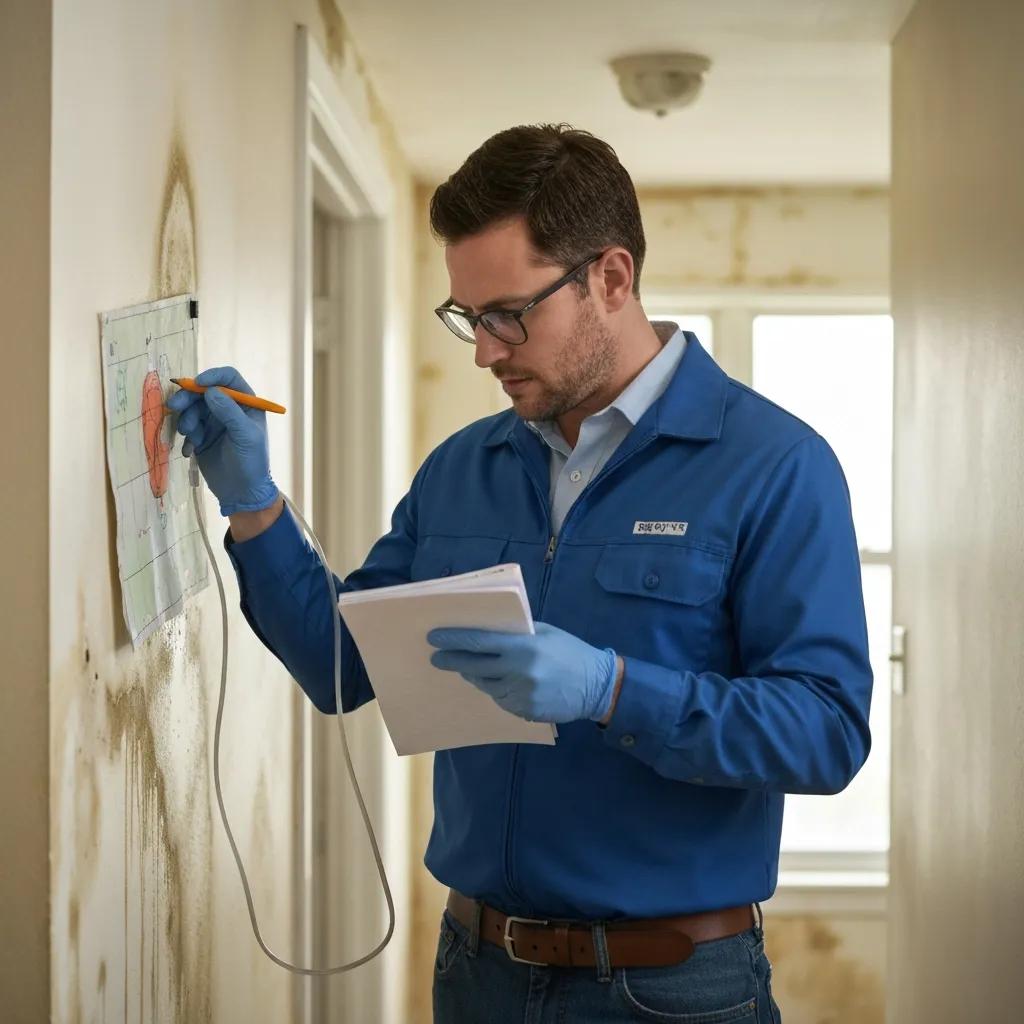
When responding to a home claim for pipe burst damage, the insurance adjuster noted mold and mildew in affected areas. The adjuster’s responsibility is to evaluate the loss and determine the scope of coverage.
Coordinating Remediation with Vetted Contractors
Adjuster–contractor coordination starts with selecting contractors who hold the right licenses, insurance, references, and who follow industry standards. From there the process moves through scope validation, documented change orders, containment and removal work, and post‑remediation clearance testing. Adjusters check contractor scopes against inspection findings to avoid gaps insurers could exploit. Change orders are documented and negotiated within the claim packet so unforeseen repairs are captured. Final clearance tests and reports are submitted to the insurer as proof remediation is complete and the claim can be closed.
- Vet contractors for licensing, insurance, and local references.
- Validate scopes to prevent underestimates and uncovered repairs.
- Use post‑remediation testing to provide clearance documentation for claim closure.
This coordinated workflow reduces homeowner stress and helps ensure repairs meet safety standards and insurer documentation requirements.
Why Choose Adjustering for Mold Damage Public Adjuster Referrals?
Adjustering is a single point of contact that connects property owners to licensed public adjusters and vetted restoration, roofing, and siding experts—removing uncertainty from both claim and repair. We provide a free claim review and free policy review to clarify coverage options and speed referrals to local professionals. Serving Philadelphia, Bucks, Montgomery, Chester, and Delaware counties plus South and Central Jersey, we match you to adjusters who understand regional insurer behavior and code requirements. A coordinated referral pathway shortens time to remediation, reduces administrative burden, and helps ensure inspections catch all damage.
- Free claim and policy reviews help identify next steps.
- Local matching ensures adjusters understand regional insurer patterns.
- Coordinated referrals include vetted contractors to complete repairs.
If you need help interpreting endorsements, finding a licensed public adjuster, or organizing remediation, Adjustering connects you with the licensed professionals who will document, negotiate, and restore.
Local Expertise Across Philadelphia, Bucks, and South Jersey
Adjustering serves Philadelphia, Bucks, Montgomery, Chester, and Delaware counties, plus South and Central Jersey. Local adjusters bring knowledge of common insurer responses in each county, local building codes, and contractor networks that speed mobilization. Fast regional response is critical for mold claims because evidence and health concerns are time sensitive. A nearby licensed professional’s report also improves the chance insurers accept the causation and scope analysis.
How Adjustering Has Helped Clients Improve Mold Settlements
Adjustering speeds access to licensed public adjusters who document causation thoroughly and coordinate with vetted contractors, often resulting in fuller remediation scopes and more complete settlement packages. Anonymized cases show that when adjusters locate hidden moisture paths and secure contractor scopes that include code upgrades and structural repairs, insurers are more likely to fund comprehensive remediation. Our free referral and policy review remove early barriers to professional engagement—the difference between a limited initial offer and a negotiated, fuller settlement.
How Adjustering Gives Owners Peace of Mind During a Mold Claim
Adjustering reduces homeowner stress by centralizing referrals and communications: one coordinated handoff connects the policyholder to a licensed adjuster and vetted contractors, creating a clear timeline and a single point of contact. Verified contractor networks and adjuster oversight ensure remediation follows industry standards and that verification testing happens before claim closure. Transparent updates and documented progress reports give owners confidence that both the claim and the repairs are being handled professionally, which shortens disruption and restores habitability faster.
- Free claim and policy reviews clarify coverage and next steps.
- Local matching pairs you with adjusters who know regional insurer behavior.
- Coordinated referrals include vetted restoration, roofing, and siding contractors.
2025 Mold Damage Trends and Insurance Claim Insights
The restoration market continues to expand in 2025, driven by more severe weather events, aging building stock, and greater attention to indoor air quality. That growth affects mold claims by increasing contractor demand, raising remediation pricing in some regions, and lengthening lead times. As testing and clearance standards evolve, insurer documentation requirements may tighten—making professional adjuster and contractor involvement more important to establish need and cost. The subtopics below explain market growth, how adjusters affect settlements, and why commercial claims are increasing in Pennsylvania and New Jersey.
Restoration Market Growth and Its Effect on Mold Claims
Market expansion can create contractor shortages and push prices higher during peak demand, which affects claim valuations and remediation timelines. As testing and clearance standards improve, insurers may require more rigorous documentation, increasing the value of professional adjuster and contractor reports. Property owners should expect longer mobilization times in busy markets and should prioritize documented scopes and competitive contractor estimates when negotiating.
General Liability Insurance Coverage for Mold Claims Explained
General liability policies often include provisions or exclusions that affect mold claims. Coverage scope depends on precise policy language, so carefully reviewing the policy is essential to know what is and isn’t covered.
How Much Can Public Adjusters Improve Mold Settlements?
Industry reports indicate professional representation can increase settlement outcomes by improving documentation, finding overlooked damage, and negotiating for code upgrades and related expenses; exact gains vary by policy, insurer, and loss specifics. Key factors are the quality of initial documentation, speed of intervention, and whether remediation requires structural replacement. Engaging a licensed public adjuster early typically produces stronger claim packages and higher recoveries compared with unrepresented submissions.
Why Commercial Mold Claims Are Rising in Pennsylvania and New Jersey
Commercial mold claims are increasing because more frequent severe weather causes hidden water intrusion, many commercial buildings have aging plumbing and envelopes, and tenant or regulatory pressure is pushing faster remediation for indoor air quality. Commercial properties often generate larger, more complex scopes that raise remediation costs. Early detection, maintenance records, and quick public adjuster involvement reduce denial risk and help businesses preserve operations during repairs.
Commercial General Liability Policies and Mold Damage Claims
Commercial General Liability policies can expose landlords and contractors to mold claims when negligent maintenance or construction leads to mold growth. Each policy’s language determines how those claims are handled.
Common Questions About Mold Damage, Public Adjusters, and Insurance Claims
This FAQ section answers the questions homeowners and business owners ask most when facing mold losses—covering timing, coverage, costs, and appeals. Each answer is concise and practical so you know when to document, when to call a public adjuster, and how to proceed if a claim is denied. The summary table below maps common questions to brief answers and indicators for contacting a licensed public adjuster.
Table intro: Below is a quick reference of typical homeowner questions, short answers, and when to contact a public adjuster.
| Question | Typical Answer Summary | When to Contact a Public Adjuster |
|---|---|---|
| Does homeowners insurance cover mold damage? | It depends on cause—sudden/accidental water events are often covered; neglect usually isn’t | Call an adjuster if the cause is unclear or the damage is substantial |
| When should you hire a public adjuster? | Hire early for hidden mold, large or complex losses, or insurer pushback | Engage an adjuster immediately after discovery to preserve evidence |
| How much does remediation cost and is it covered? | Costs vary by affected area and remediation class; insurance may cover if the cause is a covered peril | Obtain contractor estimates and involve an adjuster before accepting a settlement |
Does Homeowners Insurance Cover Mold Damage?
Short answer: it depends on cause and policy language. Homeowners insurance typically covers mold that directly results from a covered, sudden, and accidental water event, but many policies include sublimits, exclusions, or require endorsements for broader mold coverage. Document the moisture source, report the loss promptly, and get professional testing if the cause is unclear. A free policy review can reveal whether replacement cost, endorsements, or sublimits will affect your claim strategy.
When Should You Hire a Public Adjuster for Mold Damage?
Hire a public adjuster as soon as you suspect hidden mold, the affected area is large, the insurer’s initial offer is limited or denies coverage, or the policy includes complex endorsements or commercial exposures. Early engagement preserves evidence, directs mitigation to protect coverage, and helps quantify full remediation and related losses. If you lack time‑stamped documentation or the insurer asks for narrow testing, a licensed adjuster can coordinate forensic assessment and contractor scopes to strengthen your case.
How Much Does Mold Remediation Cost and Is It Covered?
Remediation costs depend on the size of the affected area, remediation class, containment needs, testing, and whether structural components must be replaced—ranging from minor cleaning to extensive reconstruction. Insurance coverage hinges on cause: sudden, accidental events are more likely covered, while long‑term neglect is usually excluded. Get multiple contractor estimates and involve a public adjuster early to ensure the claim captures full remediation needs, including code upgrades and related repairs.
How Can You Appeal a Denied Mold Insurance Claim?
To appeal, first review the insurer’s denial letter to understand the stated reason. Then gather additional evidence—independent testing, contractor estimates, and time‑stamped documentation—to rebut the denial. Common next steps include requesting a re‑inspection, submitting expert reports, initiating appraisal under the policy, or engaging a public adjuster or legal counsel. A measured appeal backed by forensic documentation often reverses denials rooted in causation or scope disputes.
- Steps to appeal: review the denial reason, gather new evidence, request re‑inspection, pursue appraisal or mediation, and engage professional representation when needed.
- Evidence that helps: moisture mapping, lab tests, contractor scopes, and medical documentation where relevant.
- When to escalate: persistent denial after new evidence or when settlement offers undervalue the documented scope.
This closes the guide with clear, actionable criteria for contacting a licensed public adjuster or requesting a free policy or claim review through a local connector.
Adjustering contact details for referral requests and free policy or claim reviews: Adjustering, 1079 Old Ford Road, Huntingdon Valley, PA 19006, United States phone (610) 707-8414 email [email protected]
Frequently Asked Questions
What should I do immediately after discovering mold in my property?
First, make the area safe: stop any ongoing water source and ventilate only if it’s safe. Don’t disturb visible mold, since that can spread spores. Take time‑stamped photos of the damage and any mitigation steps. Then contact a licensed public adjuster to assess the situation and guide testing and mitigation—early documentation is key to a successful claim.
How can I find a qualified public adjuster for my mold claim?
Start with referrals from trusted sources or use a connector like Adjustering to find licensed professionals. Look for adjusters with specific mold claim experience and familiarity with local insurance practices. Verify licenses and references. A reputable adjuster should offer a free policy review and explain coverage options clearly.
What documentation is essential for a mold damage claim?
Essential items include time‑stamped photos, moisture mapping data, lab test reports, and detailed contractor estimates. Keep records of any communication with your insurer and documentation of mitigation steps. A comprehensive file showing cause, extent, and cost is crucial when negotiating with an insurer.
Can I handle a mold claim without a public adjuster?
It’s possible, but not recommended for complex or hidden mold claims. Insurers often use tactics that reduce payouts; without specialized documentation and negotiation experience, you risk missing coverage or accepting an undervalued offer. A public adjuster improves your chance of a fair settlement.
What are the potential costs associated with mold remediation?
Costs vary widely by affected area, remediation class, containment needs, and whether structural repairs are required. Simple surface cleaning may be inexpensive, while full reconstruction can be costly. Coverage depends on cause: sudden, accidental events are likelier to be covered. Obtain multiple contractor bids and involve an adjuster to ensure all costs are captured.
How can I appeal a denied mold insurance claim?
Start by carefully reviewing the denial letter. Gather new evidence—independent test results, contractor estimates, and dated photos—and request a re‑inspection or submit expert reports. You can pursue appraisal or mediation under your policy or hire a public adjuster or attorney if needed. New, well‑documented evidence often changes an insurer’s decision.
What role does Adjustering play in the mold claim process?
Adjustering connects homeowners and businesses to licensed public adjusters and vetted remediation contractors. We offer free claim and policy reviews to clarify coverage and quickly match you with local professionals. Our goal is to reduce administrative burden, speed professional engagement, and improve outcomes by making qualified adjusters and contractors easy to reach.
