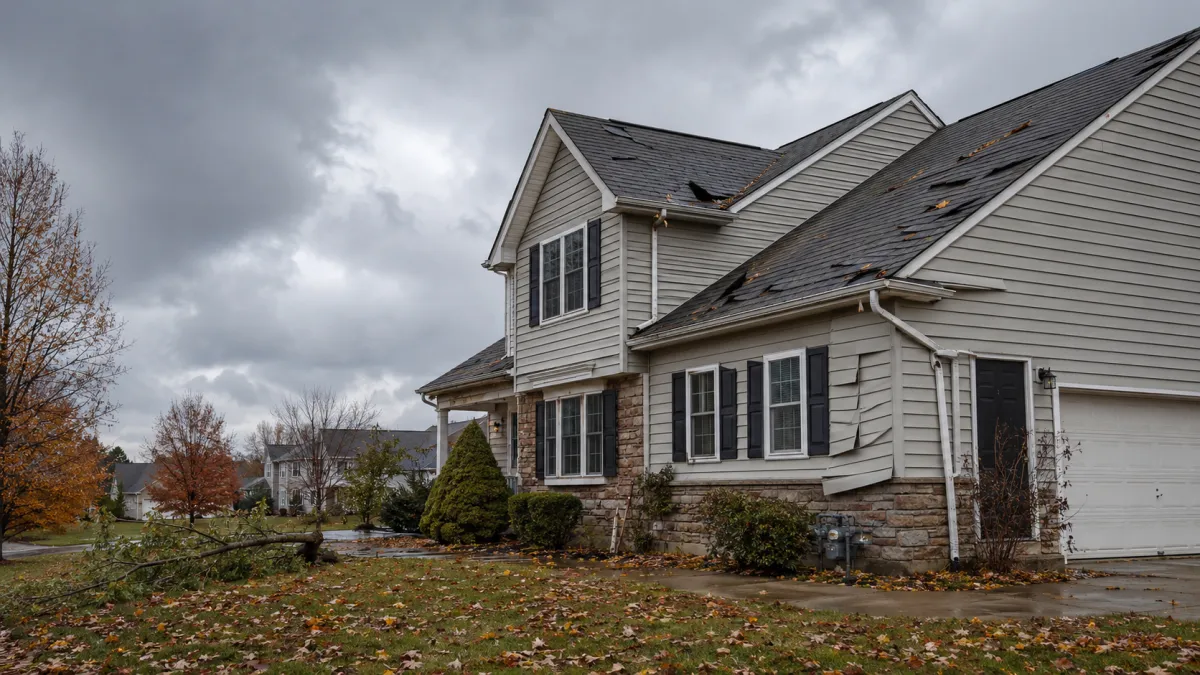
Detecting Hidden Wind Damage: Essential Tips
Property Damage, Wind Damage, Insurance Claims
Heavy Wind Damage: Hidden Warning Signs Property Owners Should Never Ignore
Heavy winds can quietly damage your property even when you don’t see missing roof sections or obvious leaks. Understanding subtle warning signs can help you protect your home, document your loss, and support a future insurance claim.
How Heavy Winds Damage Homes Without Obvious Destruction
Wind doesn’t need to tear off half your roof to cause serious problems. Powerful gusts can break the seal between shingles, loosen fasteners, and open gaps that allow water to penetrate later. From the ground, your roof may look “fine,” yet hidden vulnerabilities are already developing into future leaks and structural issues.
Subtle Exterior Warning Signs to Watch For
Lifted, curled, creased, or missing shingles: Look for edges that appear raised, bent, or folded back. Creases across shingle tabs are a classic sign of wind damage even if the shingle is still in place.
Loose flashing around chimneys, vents, and roof edges: Metal flashing that has shifted, buckled, or pulled away can quickly become a leak pathway during the next rainstorm.
Damaged gutters, fascia, and soffits: Bent or detached gutters, cracked fascia boards, or soffits blown out of place may indicate the wind uplifted parts of the roof system.
Cracked, loose, or detached siding: Warped panels, missing nails, and siding that rattles in the breeze can allow water intrusion and pest entry.
Fallen trees, branches, and flying debris damage: Even if debris didn’t fully puncture the roof, impact marks, dents, and scuffs can weaken shingles, gutters, fences, windows, doors, and other exterior structures.
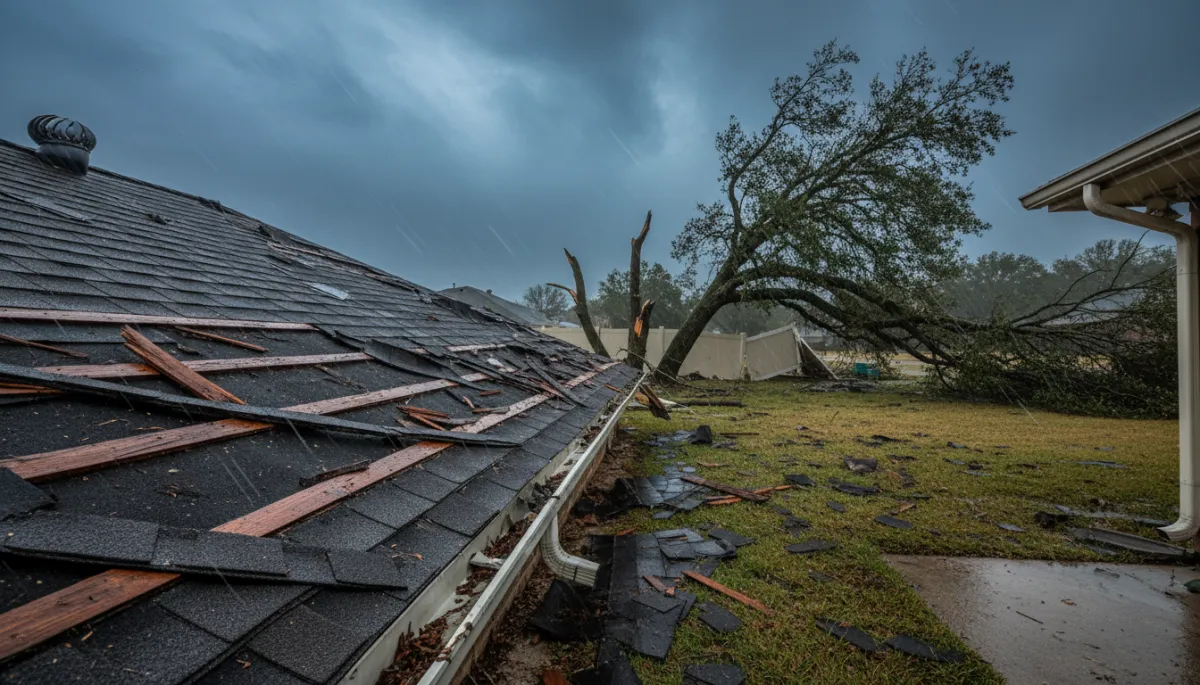
Minor-looking shingle creases often signal hidden wind damage and future leaks.
Interior Red Flags: When Wind Damage Reaches Inside
After a storm, watch for new ceiling stains, peeling paint, or damp spots on walls. In the attic, check for moisture on rafters, wet insulation, or daylight peeking through the roof deck. These signs often appear days or weeks after heavy winds first compromised your roofing system.
What to Do Immediately After a Heavy-Wind Event
Stay away from fallen trees and power lines; call authorities if needed.
Check the property from a safe location; walk the perimeter, not the roof.
Photograph visible exterior and interior damage before any cleanup or repairs.
Protect the property from additional damage when safe, such as tarping small areas or moving belongings.
Keep damaged materials unless instructed otherwise by your insurer or adjuster.
Save all invoices and receipts related to temporary repairs or emergency services.
Record insurance communications, including dates, names, and summaries of each call or email.
Arrange professional inspections and review potential claims with a licensed public adjuster.
Safety, Documentation, and When to Call Professionals
Avoid climbing onto the roof yourself—wet surfaces, loose shingles, and hidden structural damage make falls and injuries far more likely. Instead, photograph the roof, gutters, siding, fences, windows, doors, and exterior structures from the ground and upper windows. Capture close-ups of lifted shingles, loose flashing, dents, cracks, broken glass, and interior stains or attic moisture. Because wind damage is not always visible from the ground, a professional inspection can uncover hidden issues and properly document them for your claim.
Wind Damage FAQs for Property Owners
1. How can I tell whether wind damaged my roof?
Look for creased or missing shingles, loose flashing, gutter damage, debris impacts, and any new interior staining. A professional inspection provides confirmation.
2. Can shingles be damaged without being completely missing?
Yes. Lifted, curled, or creased shingles may have broken seals or fractured mats, reducing their ability to shed water and resist future storms.
3. Should I contact a roofer or my insurance company first?
In many cases, speaking with a licensed public adjuster before filing a claim helps you understand coverage, needed documentation, and whether a roofer should inspect first.
4. What photographs should I take after a windstorm?
Capture wide shots of each side of the property, then close-ups of roof edges, gutters, siding, fences, windows, doors, fallen trees, interior stains, and attic moisture.
5. When should I consult a licensed public adjuster?
Consult a public adjuster as soon as you suspect wind damage or before you accept an insurance settlement, so your loss is fully evaluated and documented.
Heavy-wind damage can remain hidden until the next rainstorm causes a serious leak. Adjustering can connect you with licensed public adjusters and vetted professionals in your area. Serving Philadelphia, Bucks County, Montgomery County, Chester County, Delaware County, South Jersey, and Central Jersey. Call 610-707-8414 or visit www.adjustering.com.
