Expert Fire Damage Adjusters for Your Insurance Claims
Fire Damage Public Adjuster for Insurance Claims — Expert Help to Maximize Your Fire Insurance Payout

Public adjusters who handle fire losses are licensed advocates for homeowners and business owners. After a fire they document damage, build a complete scope of loss, and negotiate with insurers to secure the full payout your policy allows. This guide breaks down how adjusters evaluate fire, smoke, soot, and secondary water damage and walks you through the exact steps to file a claim while protecting your recovery rights. Homeowners and business owners often feel overwhelmed by lingering odor, hidden structural issues, and confusing insurance estimates — an experienced adjuster translates policy language, expands scopes for code-required upgrades and contents replacement, and manages settlement conversations. Read on to learn a public adjuster’s core duties, the immediate actions that preserve safety and evidence, how to locate concealed soot and HVAC contamination, and practical cost–benefit considerations for hiring an advocate. You’ll also get a clear view of the restoration workflow — inspection through final repairs — and how Adjustering connects clients to licensed public adjusters and vetted contractors for coordinated, end-to-end support when timing and documentation matter most.
What Does a Public Adjuster Do for Fire Damage Insurance Claims?
A fire-damage public adjuster is your claims expert and advocate. They inspect the loss, document damaged property, assemble a detailed scope and line-item estimate, and negotiate with your insurer on your behalf. Adjusters identify covered losses — structural damage, contents loss, and Additional Living Expenses — and compile evidence that often changes the insurer’s initial scope or offer. Their work is particularly important because fire losses include hidden effects like soot migration, firefighting water intrusion, and HVAC contamination that an insurer’s quick review can miss. The sections below explain how adjusters perform technical assessments and how those assessments translate into stronger settlement results for policyholders.
How Does a Public Adjuster Assess Fire and Smoke Damage?
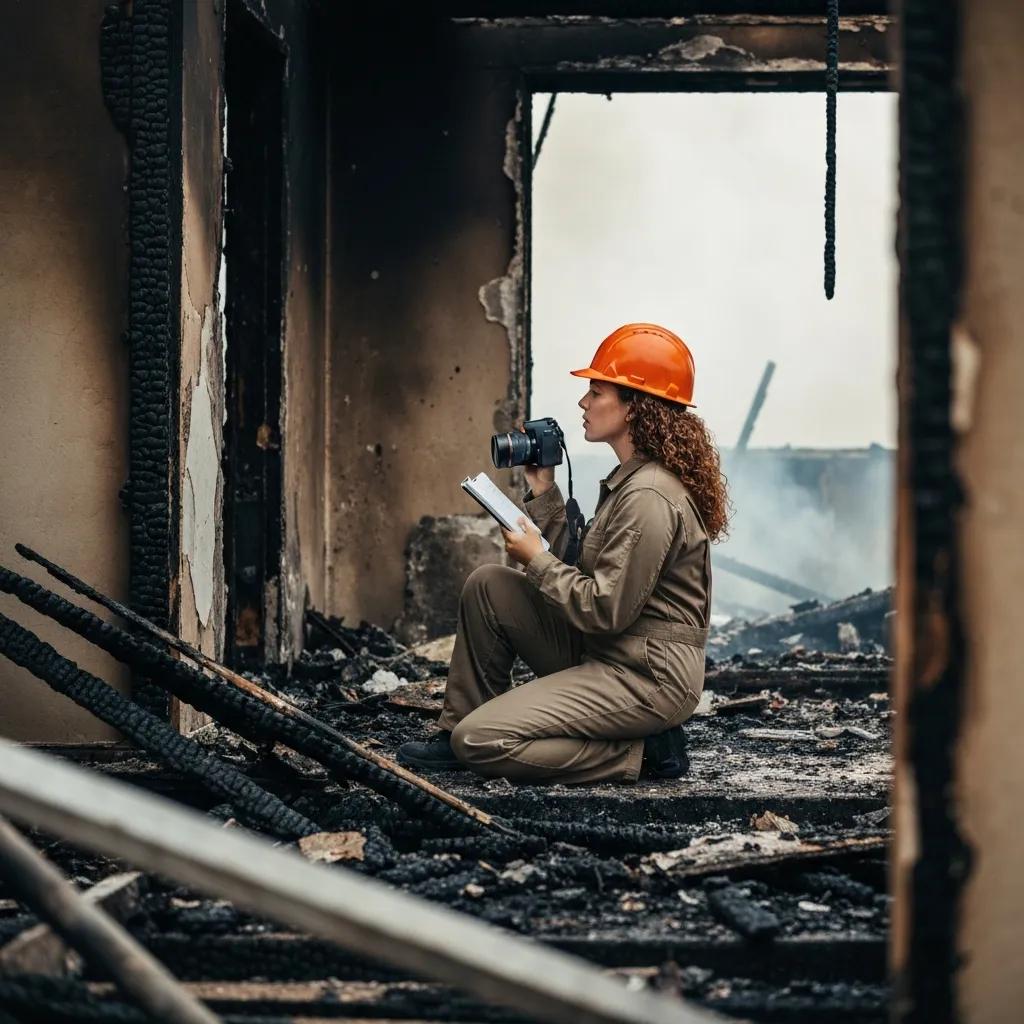
An adjuster starts with a systematic site inspection: visual checks, moisture readings, and targeted testing to find soot in wall cavities and water intrusion behind finishes. They inventory contents, photograph items from multiple angles, and record measurements and condition for each room — building a scope of loss that ties damage to repair pricing. When contamination or concealed loss is suspected, adjusters coordinate specialty testing such as air sampling, HVAC testing, and lab soot analysis to support claims for deodorization and mechanical cleaning. Thorough, time-stamped documentation strengthens your file for negotiation and reduces the chance of denied or undervalued items on the final claim.
In What Ways Do Public Adjusters Maximize Fire Damage Settlements?

Adjusters increase settlements by expanding scopes to capture overlooked damage, including code-required repairs, accurately valuing contents, and pursuing Additional Living Expenses when displacement occurs. They convert inspection findings into line-item estimates with industry-standard pricing and supporting documentation, then submit clear demands to the insurer and challenge low offers with appeals or supplemental proof. Common tactics include submitting independent contractor estimates, line items for code upgrades, and contents replacement valuations to dispute undervaluation. These approaches frequently produce materially higher recoveries than an insurer’s initial offer, which is why many property owners engage an adjuster early in the claim process.
If you want direct access to licensed public adjusters, Adjustering connects homeowners and business owners with local, licensed professionals who advocate for full insurance recoveries. Adjustering’s strength is an end-to-end support system that reduces confusion and stress during claims, provides quick access to licensed adjusters and vetted contractors, and focuses on maximizing compensation while ensuring no damage is missed.
What Are the Step-by-Step Processes for Filing a Fire Damage Insurance Claim?
Filing a fire-damage claim follows a practical sequence: secure safety, document the loss, notify your insurer, schedule inspections, work with an adjuster, negotiate settlement, and restore the property. Timely actions preserve evidence and maintain coverage eligibility; the quality of documentation often determines whether concealed damage is paid. Below is a compact, actionable checklist you can follow immediately after a fire to protect your claim rights and begin recovery.
- Prioritize safety and call emergency services if anyone is injured.
- Secure the property with temporary board-up or tarping to prevent further loss.
- Notify your insurance company to open a claim and record the claim number.
- Document damage with time-stamped photos, video, and a preliminary contents inventory.
- Schedule an inspection with a licensed public adjuster or the insurer’s adjuster.
- Gather contractor estimates and keep receipts for emergency repairs and living expenses.
- Negotiate settlement figures and approve restoration work once the scope and payment are agreed.
This checklist gives a practical framework for the first 72 hours and beyond. The next section expands on the immediate actions homeowners and businesses should take.
What Should Homeowners and Business Owners Do Immediately After Fire Damage?
First, ensure everyone’s safety and seek medical attention if needed. Do not re-enter unsafe areas until authorities clear the site. Before major cleanup, document the scene thoroughly with time-stamped photos and video of every affected room, contents, and exterior damage; save receipts for emergency purchases like lodging or water extraction. Notify your insurer right away and get a claims representative number, then contact a public adjuster if you want professional advocacy — early involvement captures hidden damage and strengthens your record. Preserve damaged items for inspection when safe to do so. Strong early documentation improves negotiation leverage and speeds interim payments for urgent needs.
How Does Adjustering Coordinate Inspections, Documentation, and Restoration?
Adjustering serves as a single coordination point to arrange inspections, collect documentation, and connect you with vetted restoration contractors, reducing your administrative burden during a stressful time. After intake, Adjustering can dispatch a licensed public adjuster to perform a full-scope review, prepare a detailed estimate, and align contractor scopes with the claim documentation. This coordinated workflow shortens timelines between inspection and repairs by synchronizing estimate revisions, contractor scheduling, and insurer submissions. With a managed process, homeowners avoid repeated site visits, conflicting contractor claims, and missed line items that commonly delay settlements.
How Can You Identify and Document Hidden Fire and Smoke Damage?

Hidden fire and smoke damage often appears in wall cavities, HVAC systems, and contents that look intact on the surface. Finding these losses requires targeted inspection and documentation. Early detection prevents health risks and expensive rework because soot can migrate through cavities, coat insulation, and contaminate ductwork. The table below lists common hidden damage types, inspection signs, and documentation actions to help you and your adjuster capture the full scope of loss.
| Damage Type | Inspection Signs | Documentation Actions |
|---|---|---|
| Soot in cavities | Lingering odor, discoloration at outlets, staining behind trim | Photograph wall cavities, record locations, take air samples when indicated |
| HVAC contamination | Smoke odor from vents, soot on registers, heavily soiled filters | Photograph ducts and filters, perform HVAC sampling, log system runtime |
| Water from firefighting | Stains, warped floors or baseboards, moldy odors after drying | Measure moisture levels, photo before/after drying, keep mitigation receipts |
| Contents absorption | Faded fabrics, trapped smoke odor in electronics or antiques | Create a contents inventory, photograph serial numbers, document cleaning or replacement estimates |
Targeted photos, measurements, and testing give you the evidence needed for line-item inclusion in claims and support requests for HVAC cleaning, insulation replacement, or structural openings. The next section highlights commonly overlooked items insurers tend to underpay.
What Types of Fire Damage Are Often Overlooked in Insurance Claims?
Insurers commonly miss soot migration into wall cavities, contaminated ceiling insulation, HVAC system contamination, and secondary water damage such as mold or delaminated finishes. Contents like electronics, antiques, and textiles can retain smoke residues that aren’t visible at first glance, and mechanical systems may need professional testing that a brief adjuster visit won’t include. Homeowners should request visible and concealed inspections, HVAC testing, and a complete contents inventory with serial numbers and purchase details when possible. Professional testing and inventory work increase the chance these items are recognized and paid within the claim.
Why Is Comprehensive Damage Assessment Critical for Your Fire Insurance Claim?
A full assessment reduces the risk of underpayment, minimizes the need to reopen claims, and protects health by identifying contamination risks such as soot in ducts or mold after water exposure. Without a complete scope, homeowners may accept partial repairs that leave lingering odors, health hazards, or structural vulnerabilities that later require out-of-pocket fixes. A comprehensive assessment links observed damage to policy coverages — structure, contents, and Additional Living Expenses — and creates a defensible negotiation position. For these reasons, bringing in a public adjuster or restoration professional early increases the likelihood that concealed losses are found and included in the settlement.
What Are the Costs and Benefits of Hiring a Public Adjuster for Fire Damage Claims?
Most public adjusters work on a contingency-fee basis, paid as a percentage of the total recovery rather than an hourly or flat fee. While fees exist, the financial uplift and time savings often outweigh the cost when an adjuster identifies overlooked losses and negotiates higher offers. Benefits include professional documentation, faster interim payments, thorough contents valuation, and reduced stress from claim management. The table below summarizes common fee models, typical settlement uplift ranges reported in industry sources, and non-monetary benefits policyholders commonly experience.
| Fee Model | Typical Range / Example | What Homeowners Get |
|---|---|---|
| Contingency percentage | Typically a percentage of total recovery | No upfront fee; incentivizes the adjuster to increase the settlement |
| Flat or hourly (less common) | Example: agreed hourly rate or flat inspection fee | Predictable cost but less common for full claims handling |
| Typical settlement uplift | Industry reports often show 10–40% increases (case dependent) | Higher recoveries for concealed loss and accurate contents valuation |
| Non-monetary benefits | Time savings, documentation, coordination | Reduced stress and a managed restoration workflow |
That comparison shows that, while adjuster fees apply, the combination of monetary uplift and delegated claim management frequently produces a net benefit for homeowners. The following subsections explain fee mechanics and evidence for settlement increases.
How Do Public Adjuster Fees Work for Fire Damage Insurance Claims?
Most public adjusters use contingency agreements: they are paid a percentage of the total recovery, aligning their incentives with yours. Contingency rates vary by state and by claim complexity and should be defined in a written contract that details services and payment timing. Best practices include getting a clear written fee agreement, confirming whether the fee applies to total recovery or only to additional amounts recovered, and verifying there are no hidden charges for inspection or paperwork. Transparent agreements protect homeowners and align the adjuster’s work with your best outcome.
What Evidence Shows Public Adjusters Increase Fire Damage Settlements?
Industry analyses and case summaries commonly show measurable increases when public adjusters are involved: they capture missed items, secure code-upgrade coverage, and improve contents valuation. An anonymized example might show an adjuster expanding a scope to include HVAC cleaning, insulation replacement, and contents valuation, producing a double-digit uplift compared with the insurer’s initial estimate. Outcomes vary by policy and circumstance, but studies indicate meaningful uplifts when adjusters document concealed losses and present robust pricing. Early engagement improves documentation quality, a key driver of settlement increases.
How Does Adjustering’s Network Support Fire Damage Restoration and Repairs?
Adjustering’s network pairs licensed public adjusters with vetted roofing, siding, and restoration contractors so inspection findings convert directly into quality repairs that validate the claim. The network prioritizes licensed, insured, and background-checked contractors who handle emergency board-up, soot remediation, structural repair, and contents restoration — creating an end-to-end flow from assessment to final sign-off. Adjustering offers fast access to these experts and a coordinated process that reduces duplicated work, aligns scopes between adjusters and contractors, and helps prevent missed line items. The table below lists contractor types, typical qualifications, and services provided within Adjustering’s network.
| Contractor Type | Qualification | What They Do |
|---|---|---|
| Roofing contractors | Licensed, insured | Repair or replace roof structure, flashing, and decking |
| Siding contractors | Licensed, insured | Replace exterior cladding, trim, and weather barriers |
| Restoration companies | Certified technicians, insured | Soot removal, deodorization, and contents cleaning |
| General contractors | Licensed, insured | Structural repairs, code upgrades, and final reconstruction |
That coordinated approach ensures adjuster estimates and contractor scopes align, which reduces disputes with insurers and speeds repair timelines. In addition to vetting, Adjustering emphasizes rapid-response availability and a guaranteed free adjusting service to help homeowners move from inspection to restoration quickly.
Who Are the Licensed and Insured Contractors in Adjustering’s Fire Restoration Network?
Network contractors include licensed roofing and siding specialists who repair the building envelope, restoration firms that specialize in soot, odor, and contents cleaning, and reconstruction teams that manage code upgrades and finishing work. Each contractor meets vetting standards: active licensing, proof of insurance, and background checks when applicable, providing professional workmanship and liability protection. When contractors work from a public adjuster’s scope, repair estimates reflect covered line items and code-required upgrades insurers are more likely to approve. Verifying licenses and insurance before work begins remains a best practice.
What Restoration Services Are Included After Fire Damage?
Restoration typically follows an emergency-to-reconstruction sequence: emergency board-up and tarping, water mitigation and drying, soot and odor removal, HVAC and duct cleaning, contents cleaning and inventory, decontamination, and final structural repairs. Emergency services stabilize the property and limit additional damage; mitigation lowers the risk of mold and other secondary losses; specialized cleaning addresses smoke residues and odors before reconstruction. Contents restoration specialists handle textiles, electronics, and valuables, often returning salvageable items to usable condition. Coordinating these services with claim documentation reduces disputes and supports full reimbursement.
Which Areas Does Adjustering Serve for Fire Damage Public Adjuster Services?
Adjustering provides fast access to fire-damage experts across Philadelphia, Bucks, Montgomery, Chester, and Delaware counties, as well as South Jersey and Central Jersey. We offer 24/7 availability and rapid scheduling so inspections and mitigation can begin promptly. Local presence and partnerships with regional contractors mean adjusters and restoration teams can be dispatched quickly to document hidden loss and start emergency measures. When fast action matters — for example, preventing mold after firefighting water — Adjustering’s network aims to shorten the time between loss and mitigation. If you need immediate assistance, Adjustering can coordinate an initial inspection and connect you to licensed public adjusters and vetted contractors in the region.
How Does Adjustering Provide Fast Access to Fire Damage Experts in Philadelphia and Surrounding Counties?
Adjustering follows a rapid-response workflow that starts with a call or form submission, a brief intake to capture loss details, and immediate scheduling of a licensed public adjuster for inspection. That process reduces delays that allow secondary damage to develop. Local contractor availability and 24/7 emergency support let board-up, water extraction, and temporary repairs begin while documentation proceeds, protecting health and preserving insurability. Coordinated reporting and contractor scopes accelerate insurer approvals and settlement disbursements. Fast local access matters because early mitigation preserves evidence and can materially affect claim outcomes.
What Local Resources Are Available for Fire Damage Claims in South and Central Jersey?
Regional resources include state insurance department guidance for filing complaints, local fire department contacts for safety inspections and fire reports, and contractor licensing lookups to verify credentials. Homeowners should use these authoritative sources alongside professional adjuster help. Community disaster assistance programs and local restoration trade organizations can offer additional guidance on vetted contractors and temporary housing when displacement occurs. Combining local resources with a licensed public adjuster and vetted restoration partners helps ensure procedural compliance and access to emergency assistance, reducing the risk of procedural missteps.
Frequently Asked Questions
What Should I Do If My Insurance Claim Is Denied?
Start by reviewing the denial letter to understand the insurer’s stated reasons. Common causes are insufficient documentation or specific policy exclusions. You can appeal by gathering new evidence — photos, contractor estimates, and expert reports — and submitting a formal appeal or supplemental claim. A public adjuster can help package the additional evidence, navigate appeals, and present a stronger case to the insurer.
How Can I Ensure My Claim Covers All Types of Damage?
Make a thorough assessment as soon as it’s safe to do so. Photograph and video all visible damage and consider hiring a public adjuster who specializes in fire losses. Adjusters and restoration professionals identify hidden damage — soot in HVAC systems or water damage from firefighting — that’s often missed. A detailed contents inventory and comprehensive documentation strengthen your claim and increase the likelihood that all eligible damages are covered.
What Are the Common Mistakes to Avoid When Filing a Fire Damage Claim?
Common mistakes include failing to fully document damages, delaying notification to your insurer, and not saving receipts for emergency expenses. Homeowners also sometimes wait too long to engage a public adjuster. Avoid these pitfalls by documenting everything, reporting the loss promptly, keeping detailed records of communications, and seeking professional help early when the loss is complex.
How Can I Speed Up the Fire Damage Claim Process?
Act quickly: document the damage thoroughly and notify your insurer right away. Engage a public adjuster early to manage the claim, ensure accurate assessment, and compile organized documentation — photos, repair estimates, and inventories. Maintain open communication with your insurer and respond promptly to requests. These steps help prevent delays and support faster interim and final payments.
What Should I Expect During the Inspection Process?
During inspection a public adjuster will assess visible and concealed damage, photograph affected areas, take measurements, and create a detailed inventory of damaged items. They may use moisture meters and other tools to detect hidden water or soot and will discuss your policy coverages and what damages are eligible. Expect a thorough assessment aimed at documenting all recoverable loss.
Are There Time Limits for Filing a Fire Damage Claim?
Yes. Insurance policies and state laws set time limits for reporting losses and filing claims; these vary by state and by policy. Most policies require prompt reporting, often within days or weeks. Missing deadlines can jeopardize coverage. Review your policy and consult a public adjuster if you’re unsure about timing requirements so you can preserve your rights.
What Role Does a Public Adjuster Play in the Claims Process?
A public adjuster represents your interests throughout the claims process rather than the insurer’s. They assess damage, prepare documentation, and build a detailed claim on your behalf. Their expertise helps identify eligible damages — including hidden issues — and they negotiate with the insurer to maximize your settlement. By handling the claims complexity, a public adjuster reduces stress and increases the likelihood of a favorable outcome.
How Long Does a Fire Damage Insurance Claim Typically Take to Settle?
Claim timelines vary. Initial inspections and interim payments can happen within days or weeks, but full settlement and reconstruction often take months depending on complexity, concealed damage, testing needs, and insurer responsiveness. Factors that lengthen timelines include hidden damage, specialty testing, contractor availability, and disputes that trigger appraisal or appeal. Engaging a public adjuster early and supplying complete documentation helps close information gaps and can speed interim payments for emergency repairs. Set realistic expectations and remain proactive to avoid surprises.
Can You Reopen a Fire Damage Insurance Claim After Initial Settlement?
You can sometimes reopen a claim if concealed damages surface after settlement, provided your policy, state laws, and insurer procedures allow supplemental claims or reopening. Documentation is key: gather new evidence such as lab results, contractor findings, or professional reports that weren’t available at settlement and submit a supplemental claim or appeal through a public adjuster. Time limits and policy language can restrict reopening, so review your policy and consider professional representation to assess viability. A public adjuster can package supplemental evidence and negotiate additions where permitted.
What Types of Fire Damage Are Covered by Standard Insurance Policies?
Standard homeowners and commercial property policies typically cover structure repairs, personal property loss or replacement, and Additional Living Expenses when you’re displaced — subject to policy limits, deductibles, and terms like Replacement Cost Value versus Actual Cash Value. Exclusions often include intentional acts, preexisting maintenance issues, and wear-and-tear; code-upgrade coverage or an ordinance-and-law endorsement may be required for some rebuilding costs. Reviewing your policy with a public adjuster clarifies applicable coverages — structure, contents, debris removal, and ALE — and identifies endorsements that affect recovery so the adjuster can pursue all eligible line items.
How Do Smoke Damage and Soot Affect HVAC Systems and Indoor Air Quality?
- Key remediation steps: HVAC testing, duct and coil cleaning, and filter replacement.
- Health considerations: Fine soot particulates can aggravate respiratory conditions and warrant professional assessment.
- Claims action: Document HVAC contamination with photos, sampling, and technician reports to include in your claim.
For immediate help after fire damage — documenting loss, scheduling inspections, and coordinating restoration — contact Adjustering by phone at (610) 707-8414 or email [email protected], or visit our local office at 1079 Old Ford Road, Huntingdon Valley, PA 19006. Adjustering connects you with licensed public adjusters and vetted contractors to manage the claim process end-to-end, reduce confusion, and help maximize compensation while ensuring repairs restore both your property and peace of mind.
