
Prevent Fall Damage: Tips for PA & NJ Homeowners
Home Maintenance, Fall Property Damage, Insurance Claims
Hidden Fall Home Damage: What Pennsylvania and New Jersey Property Owners Should Check Before Winter
As temperatures drop across Pennsylvania, South Jersey, and Central Jersey, fall property damage can quietly build up long before the first snowstorm. Catching these issues now protects your home or business and strengthens any future insurance claim.
How Fall Property Damage Hides Until Winter
Recent storms in our region have brought heavy rain, wind, and hail, adding stress to roofs and drainage systems. When leaves and debris build up, they cause overflowing gutters and clogged downspouts. Water then backs up under shingles, behind siding, and into walls, creating seasonal water damage that may not show until freezing temperatures and ice make it worse.
Key Areas to Check in a Fall Roof Inspection
A careful fall roof inspection is essential for homeowners, landlords, business owners, and property managers. Look for loose shingles, lifted edges, or missing tabs that allow water intrusion. Pay special attention to metal flashing around chimneys, vents, and skylights. Damaged flashing is a common source of attic and ceiling leaks and can turn a small opening into a major hidden roof leak once snow and ice arrive.
Inside, check your attic for damp insulation, dark stains, or musty odors. These are early warning signs of trapped moisture that can lead to mold and rot. On ceilings and upper walls, look for new discoloration, bubbling paint, or peeling drywall after heavy rain or windstorms.
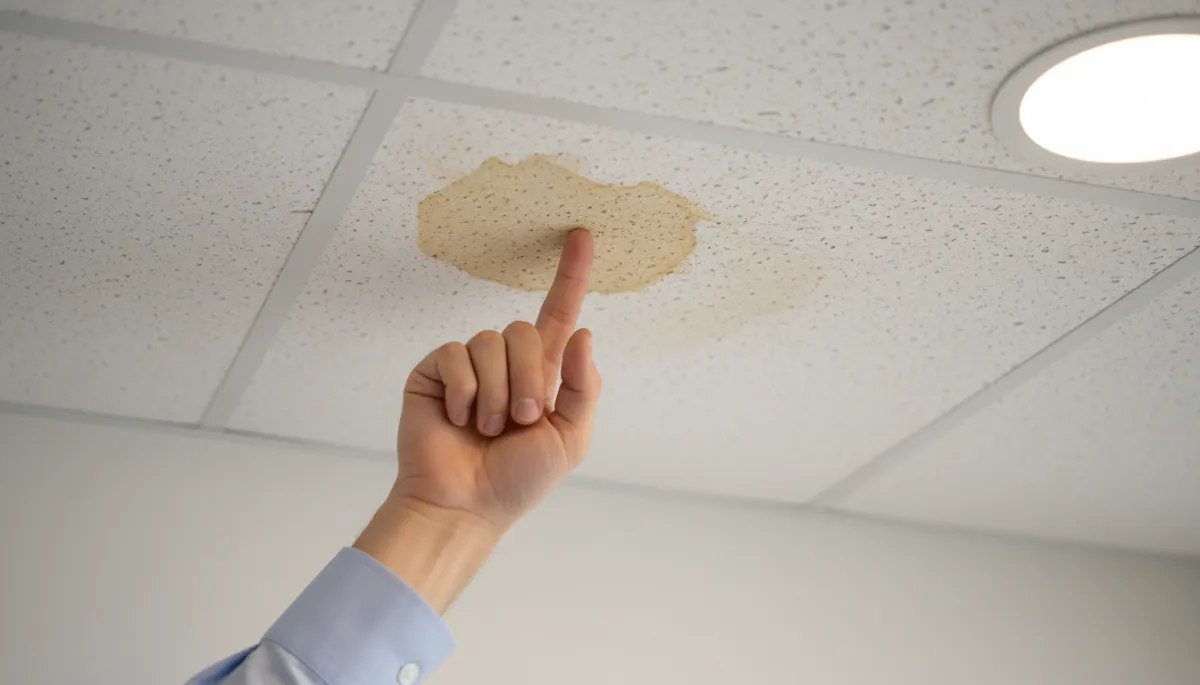
Subtle ceiling stains often reveal roof leaks long before structural damage appears.
Don’t Forget Gutters, Siding, and Wind Damage
After each fall storm, clear leaves and branches from gutters and confirm downspouts are directing water well away from foundations. Overflow from clogged gutters can seep into basements and crawlspaces. Following strong windstorms, walk around the property and perform a siding inspection, looking for cracks, gaps, or panels pulled loose by flying debris or hail. These openings can funnel water behind walls and insulation.
Fall Property-Damage Checklist
Clean gutters and remove all leaves and debris.
Check downspouts for clogs and confirm water flows away from the building.
Inspect shingles for loose, lifted, curled, or missing sections.
Examine flashing around chimneys, vents, and skylights for gaps or rust.
Check attic moisture, insulation, and ventilation after heavy rain.
Look at ceilings and upper walls for stains, bubbling, or peeling paint.
Inspect siding for cracks, missing pieces, or wind-blown damage.
Photograph damage, including close-ups and wide shots of affected areas.
Save contractor reports, emergency mitigation invoices, and repair receipts.
Arrange professional inspections when you see possible roof, siding, or water issues.
Documentation, Mitigation, and When to Call a Public Adjuster
If you suspect a hidden roof leak or other fall property damage, act quickly. Take clear photos, note dates of storms, and keep all emergency mitigation receipts for drying, tarping, or temporary repairs. Insurers generally expect you to limit further damage, and these records support a strong storm damage insurance claim.
Contact roofing or restoration professionals when you see active leaks, sagging ceilings, widespread shingle loss, or suspected mold. A licensed public adjuster may help when damage is significant, your claim is complex, or you feel your insurer’s estimate does not fully reflect the loss.
Fall Damage FAQs
1. What are common signs of fall roof damage?
Look for loose or missing shingles, granules in gutters, damaged flashing, interior stains, and daylight visible in the attic.
2. How dangerous are clogged or overflowing gutters?
Clogged gutters can force water under roofing, behind siding, and into foundations, causing structural and interior water damage over time.
3. Can a small water leak really become a big problem by winter?
Yes. Slow leaks can saturate insulation, promote mold growth, and worsen with freeze–thaw cycles, increasing repair costs.
4. What insurance documentation should I keep for a fall claim?
Keep photos, videos, contractor estimates, inspection reports, temporary repair invoices, and receipts for drying or cleanup services.
5. How can a public adjuster help with a storm damage insurance claim?
A public adjuster represents you, documents the full scope of damage, reviews your policy, and negotiates with the insurer on your behalf.
Protect Your Property Before Winter with Adjustering
If you suspect fall property damage at your home, rental, or commercial building in Philadelphia, Bucks County, Montgomery County, Chester County, Delaware County, South Jersey, or Central Jersey, don’t wait for winter to expose the full extent. Adjustering connects property owners with licensed experts who can inspect damage, document conditions, and support your recovery process. Call 610-707-8414 or visit www.adjustering.com to get started today.
